
Financial toxicity negatively impacts adherence to imaging recommendations
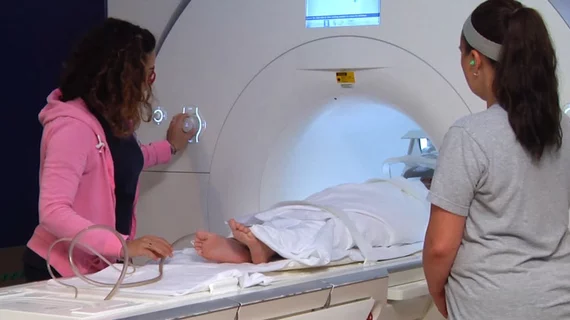
New data cite cost-related barriers as a primary driver of nonadherence to imaging recommendations.
Financial toxicity—defined as the negative impact resulting from the financial burden of medical care—represents a significant obstacle for many patients. Parents may be especially vulnerable to the ramifications of financial toxicity, as tending to the medical needs of a child can come with hefty costs in addition to what they spend on their own healthcare. A new paper in Academic Radiology indicates that financial toxicity among parents prevents many of them from following through with imaging recommendations for their kids.
“Although cost-related nonadherence is more commonly studied in the context of medication adherence, our findings highlight that families may also face difficult tradeoffs regarding their child’s diagnostic imaging due to medical costs,” Shireen E. Hayatghaibi, PhD, with the department of radiology at Cincinnati Children’s Hospital, and colleagues noted. “Cost-related delays in imaging may have real clinical outcomes consequences, such as diagnosis delays and impact on disease monitoring and treatment.”
To get a better idea of how financial constraints impact imaging adherence, researchers conducted a survey of parents and caregivers who presented at 1 of 2 pediatric hospitals in the U.S. between July 2024 and May 2025. Responses also were used to analyze how financial toxicity affected caregivers’ decision-making with respect to following through on their children’s imaging recommendations. Financial toxicity was measured using the adapted a validated measure (FACIT-COST or Functional Assessment of Chronic Illness Therapy/Comprehensive Score for Financial Toxicity), with scores lower than 26 representing higher toxicity.
For the 399 respondents, the mean FACIT-COST score was 24.6; nearly half of these individuals fell under the high financial toxicity threshold. Advanced imaging modalities, such as MRI and CT, were more frequently associated with negative financial impacts on caregivers. Those with lower household incomes were significantly more likely to report not adhering to recommendations; around 7% admitted to delaying or foregoing their children’s imaging due to financial hardship.
“Although only a minority of families reported delaying or forgoing imaging due to cost, this finding has important clinical relevance. While currently an underreported metric in imaging literature, prior work in a single adult institution found that 12% of adult patients did not complete recommended follow-up imaging,” the authors wrote. “Cost-related delays in imaging may have real clinical outcomes consequences, such as diagnosis delays and impact on disease monitoring and treatment.”
The research team noted that screening for financial hardship is routine in other medical settings, such as primary care and oncology, but is less common in radiology. This, they suggested, represents a gap in care that could be addressed to improve imaging adherence for kids, as “these screenings can be feasibly conducted in pediatric outpatient imaging settings.”
“Our study findings highlight the need for such screenings, as evident in the high prevalence of families experiencing high financial strain. However, screening alone is insufficient without actionable follow-up,” the authors noted.
Read more here.

In addition to her background in journalism, Hannah also has patient-facing experience in clinical settings, having spent more than 12 years working as a registered rad tech. She began covering the medical imaging industry for Innovate Healthcare in 2021.