
Experts unveil PE-RADS—a new reporting framework for pulmonary embolism
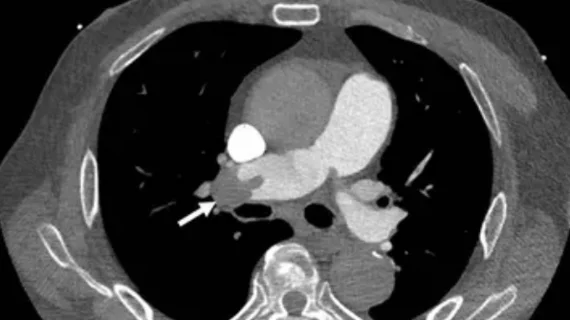
The American College of Radiology, alongside six other collaborating medical societies, just introduced the first standardized reporting framework for pulmonary embolism imaging.
The Pulmonary Embolism Reporting and Data Systems, or PE-RADS, was developed to provide radiologists with a structured lexicon and grading system for CT and MR angiography of patients with suspected PE. Similar to BI-RADS, the system is intended to standardize terminology, describe specific findings, improve communication and guide patient care.
Experts outlined the new criteria on Tuesday in RSNA’s flagship journal Radiology. The system uses a simple 0-4 grading scale that classifies clot location and incorporates right-heart imaging findings to support risk stratification. It also includes modifiers for limited image quality and nonpulmonary embolism causes of pulmonary artery abnormalities. Developers said the framework is intended for use with both CT pulmonary angiography—the gold standard for diagnosing pulmonary embolism—and MR angiography.
“As the first standardized lexicon and structured reporting system for pulmonary embolism imaging, PE-RADS v2026 is designed to provide a framework for reporting CT and MR angiographic findings in a clear, consistent manner to guide next steps patient care,” Lynne M. Koweek, MD, a professor of radiology at Duke University, Durham, North Carolina, and chair of the ACR PE-RADS committee, said in a statement July 21. “These are commonly performed exams that can be challenging to interpret, and imaging findings are critical to patient management.”
The new framework is the result of a collaboration between clinicians representing several medical specialties, including radiology, emergency care, chest medicine, interventional radiology, pulmonology and more. According to ACR, PE-RADS is aligned with existing pulmonary embolism guidelines and is designed to support widespread adoption while providing a standardized foundation for future research on patient outcomes, resource utilization and reporting consistency.
“We hope that all radiologists will use PE-RADS to enable clear communication and coordination with care teams,” Koweek said.
To learn more, click here.

In addition to her background in journalism, Hannah also has patient-facing experience in clinical settings, having spent more than 12 years working as a registered rad tech. She began covering the medical imaging industry for Innovate Healthcare in 2021.