
Feds release highly anticipated No Surprises Act final rule, drawing mixed reactions from radiology
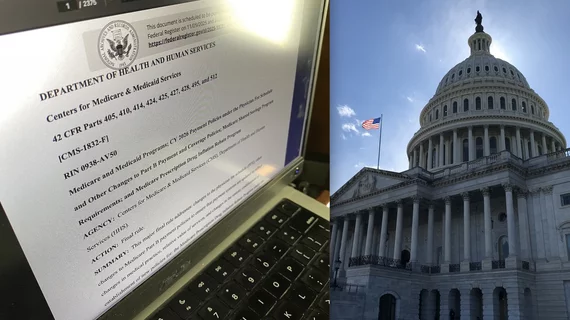
After two and a half years of waiting, the federal government on Thursday issued a highly anticipated rule dictating key changes to the No Surprises Act.
The Centers for Medicare & Medicaid Services is finalizing updates relating to the landmark law’s independent dispute resolution process, used to settle payment quarrels between docs and insurers. CMS first issued the initial proposed rule back in November 2023 in response to negative industry feedback about the process.
Key changes seek to improve communication between payers and providers, allow for open negotiations before the IDR process begins, and improve “batching” provisions that allow physicians to submit similar claims together.
“Americans should never be blindsided by unexpected medical bills,” Health and Human Services Secretary Robert F. Kennedy Jr. said in a statement May 28. “This rule cuts through bureaucratic delays, strengthens transparency between payers and providers, while continuing to protect patients from unnecessary financial stress.”
Initial industry reactions to the final IDR rule have been mixed. Fort Worth-based Radiology Associates of North Texas—which has heavily criticized shortcomings in the No Surprises Act in recent weeks—said it “appreciates” efforts to improve efficiency and transparency in the NSA. Changes being finalized this week will make “incremental improvements to communication, standardization and administrative workflow,” RANT believes.
“However, from the perspective of an independent physician group operating at scale within the system, this rule does not address the core issues driving dysfunction in the NSA process,” RANT Chief Revenue Officer Dave Walker told Radiology Business Thursday. “While the reduction in CMS administrative fees is welcome, it does not materially change the economics of the process.”
More on the final rule
Thursday’s final rule appears similar to the proposed one issued in 2023. CMS further broke down details of the sprawling 607-page final rule in a separate fact sheet. It included updates to the dispute-resolution process across seven categories:
1. Improving communication between payers and providers: Radiologists and other physicians have reported difficulties communicating and receiving key information necessary to resolve payment disputes, CMS noted. To ensure all parties are on the same page, the administration is finalizing a requirement for payers to communicate information using specific coding. These updates will help reduce the number of ineligible payment disputes submitted to the IDR process. In addition, the administration is finalizing a requirement that insurers provide detailed information at the time of a denial or payment, such as the name of the impacted group health plan and business it covers.
2. Open negotiation: The original No Surprises Act established a 30-business-day open-negotiation period between payers and providers before initiating the IDR process. This would give the two sides a chance to exchange information and agree on an appropriate payment rate before having to waste money on arbitration. However, HHS has received “numerous reports” that parties are not meaningfully engaging in open negotiation before proceeding with IDR. The administration is finalizing several changes to spur these conversations, issuing official notices when open negotiations begin and end and information on what was discussed.
“These changes will create more certainty regarding whether and when an open negotiation period occurred by ensuring that start and end dates are documented in the federal IDR portal and may reduce the number of ineligible disputes,” CMS said.
3. Batching: Radiologists and other physicians have suggested that the feds should allow for more flexibility when being able to batch together like items and services into a single dispute. Responding to this, the administration is finalizing amendments to current rules. Qualified cases can now be batched based on (1) items and services furnished to a single patient on the same or consecutive dates of services and billed on the same claim form. (2) Items and services furnished to one or more patients and are billed under the same or a comparable code. (3) Radiology, anesthesiology, pathology and lab items and services that are furnished to one or more patients under service codes belonging to the same Category 1 CPT code section. This is to address the “unique circumstances of certain medical specialties and provider types.”
This comes after Radiology Associates of North Texas and other imaging stakeholders have experienced challenges with batching together claims to help cut costs and achieve efficiencies.
CMS said the administration also is finalizing a limitation to batched determinations of 50 qualified IDR items and services in a single dispute. This is meant to ensure that certified IDR entities can make “timely eligibility and payment determinations and are able to reasonably forecast and cover their costs.”
4. IDR eligibility: Determining whether a payment dispute is eligible for the arbitration process has proven to be “complex, time-consuming and resource-intensive” work. Oftentimes, IDR entities have had to handle this work without adequate compensation, CMS said, impeding timely payment determinations. To address this, the administration is finalizing a requirement that IDR entities must determine eligibility within 5 business days of being selected. They also must notify both disputing parties and the federal government at the time. In addition, the final rule requires parties to submit detailed information to the IDR entity within 5 business days of the request. If a party fails to do so, the arbitrator will either proceed without this info or close the dispute.
5. Administrative and certified IDR entity fees: Both radiologists and insurers must pay a nonrefundable administrative fee for participating in the IDR process to ensure it remains “financially self-sustaining.” However, to preserve provider access to IDR and affordability, the feds are now finalizing an administrative fee of $15 per party per dispute, an 85% reduction from the previous amount of $115. This amount is regardless of the amount tied to a dispute or eligibility. HHS and the departments of Labor and Treasury also are codifying existing guidance in the regulation, requiring insurers and providers to pay their fees by the time their offer is due. CMS additionally said the departments are finalizing a clarification regarding the feds’ right to collect unpaid administrative fees, consistent with federal debt collection laws.
6. Extenuating circumstances: The final rule also revises the types of extenuating circumstances in which the IDR process time period may be extended. Such delays will be granted, for instance, when there is an unexpectedly high volume of disputes, the federal IDR portal has failed, or there are systematic delays in processing disputes, CMS noted. Parties may continue to request extensions through the federal IDR portal.
7. IDR registry: Radiologists and other physicians have reported that, when they initiate open negotiations, it is often difficult to identify the payer and find the correct contact information. This is particularly noteworthy when trying to distinguish between different group health plans offered by the same plan sponsors, according to CMS. To address these and other challenges, the feds are finalizing a requirement that payers subject to IDR must register with the departments and provide certain general information on the application to IDR. Upon submitting this info, health plans will receive an IDR registration number, making it easier for radiologists and other physicians to acquire the key details and determining eligibility.
You can read much more about the timing of when these changes go into effect in the full CMS fact sheet. For instance, the new codes spelled out in No. 1 will take effect 60 days after the final rule is published in the Federal Register (which will happen shortly). Meanwhile, modifications to the definition of a batched dispute will be applicable for disputes with open negotiations beginning 90 days after the final rule is published.
More on industry reactions
Reactions from radiology groups, medical societies and other specialties have been mixed. The American College of Radiology issued a preliminary summary of the rule on Thursday, saying it’s “pleased” the departments addressed concerns “raised about imaging providers’ access to the IDR process.”
“Specifically, the final rule provides expanded dispute bundling regulations, a reduced administrative fee, and regulations to require insurers to provide necessary information with initial payments,” ACR said in a news update.
In its summary, ACR highlighted some radiology requests that did not make it into the final rule. For instance, the college had asked that the federal government levy “enforcement penalties” for insurers who fail to provide their “Claim Adjustment Reason Codes” and “Remittance Advice Remark Codes” spelled out in No. 1 on the previous list. However, the departments have decided not to impose consequences on payers, opting instead to assess the process and propose any further changes in “future rule-making.”
Ed Gaines, an attorney and health policy expert with Zotec Partners, believes the inclusion of these new communication codes could be a “huge potential win for physicians.” He contends this will “significantly” reduce the number of ineligible claims submitted to IDR. Gaines also labeled other changes in the final rule—such as reduced administrative fees and requirements for payers to register in the IDR portal—as wins for the physician community, though the “devil will be in the details,” he told Radiology Business.
The Medical Group Management Association also highlighted the reduced fee as a positive, noting that it “removes a real barrier to access,” one that particularly hurt small practices.
“Requiring health plans to clearly indicate whether a claim is subject to IDR will bring greater transparency and help eliminate the costly problem of ineligible claim submissions,” Anders Gilberg, senior VP of the MGMA, which represents over 15,000 practices, said in a statement May 28. “We will continue to analyze the full rule in the days ahead, but MGMA is encouraged by these commonsense reforms.”
The American College of Emergency Physicians—which has lobbied on NSA issues alongside the ACR—applauded the rule, noting it will “greatly strengthen the federal process.” However, ACEP stressed the importance of holding payers accountable when they break the rules.
“Finalizing these long-awaited reforms largely as proposed is an important step toward a more transparent, efficient, and effective IDR process, but it is only the first step,” ACEP President L. Anthony Cirillo, MD, said in a statement. “The rule’s overall success will now depend on strong, consistent enforcement, and meaningful consequences for noncompliance.”
Radiology Partners, the largest imaging group in the U.S., said the reduced fee will greatly benefit the specialty. Many imaging claims are relatively low dollar, with the prior fee structure making IDR “economically impractical even when a claim was clearly underpaid.” Rad Partners also noted that the 50-line-item cap for batched disputes is helpful to radiologists and aligns with the specialty’s recommendations.
“Taken together, the lower fee and higher batching limit should improve the economic viability of putting more appropriate radiology claims through IDR, where those claims meet the final batching criteria,” Malea Reising, VP of strategic communications, health policy and advocacy for Rad Partners, told Radiology Business. “That said, CMS did not adopt the broader radiology batching structure we had recommended. The agency retained the more granular 27 radiology CPT-range subcategories, rather than allowing broader batching across four radiology categories: Diagnostic Radiology, Radiation Oncology, Nuclear Medicine and Interventional Radiology. So, while the rule improves the economics of IDR, it does not fully resolve the operational complexity radiology practices face when trying to batch claims efficiently.”
Radiology Associates of North Texas noted that the primary cost burden for practices remains the IDR entity fees, which are incurred on a per-dispute basis. The practice recently released an analysis of its billing claims, estimating it will spend over $50 million on wasteful batching restrictions related to IDR.
“These costs are directly tied to the volume of disputes—volume that is being driven by payer behavior, not provider preference,” RANT's Dave Walker noted.
The radiology practice also questioned language in the rule emphasizing the importance of resolving disputes during the open negotiation period. These conversations rarely result in a meaningful pathway to dispute resolution, RANT said.
“Payers frequently decline to engage in substantive discussions, instead relying on the IDR process as the default. Without meaningful incentives or penalties to encourage good-faith negotiation, it is unlikely that this behavior will change,” Walker said in a statement.
While the final rule attempts to clarify batching rules, for radiology “these changes do not solve the underlying inefficiencies,” he added. Radiologists often are forced to batch at the employer-plan level rather than by third party administrator. They also must choose 1 of 2 “very narrow options”—either a single patient with multiple CPT codes or a breakdown of codes into different categories.
“In practice, this results in very small batch sizes, in which the IDR entity fees often approach or even exceed the total value of the claims in the batch,” Walker said. “This creates a system that is not only administratively burdensome but also economically irrational, driving wasteful inefficiencies rather than meaningful dispute resolution.
Most importantly, the rule does not address the “underlying issue” with the qualifying payment amount, a benchmark figure used as a starting point for negotiations. In the practice’s experience, QPAs remain “significantly below market rates” and continue to function as a “de facto rate-setting mechanism that advantages payers.” When negotiations and arbitration are “anchored to an inaccurate benchmark,” RANT said, “process improvements alone cannot produce fair outcomes.”
The country’s largest independent imaging group called for passage of federal legislation to address some of the shortcomings of the No Surprises Act. It wants to see reforms addressing three areas:
- Accurate and transparent qualifying payment amount calculation.
- Enforcement of arbitration outcomes.
- Accountability for payer behavior in open negotiation and batching practices.
“Ultimately, this rule improves how disputes are processed—but it does not fix how they are valued, resolved, or paid,” Walker said. “Without these changes, the incentives within the system remain misaligned, and the burden continues to fall disproportionately on independent physician practices,” the statement concluded.

Marty Stempniak has covered healthcare since 2012, with his byline appearing in the American Hospital Association's member magazine, Modern Healthcare and McKnight's. Prior to that, he wrote about village government and local business for his hometown newspaper in Oak Park, Illinois. He won a Peter Lisagor and Gold EXCEL awards in 2017 for his coverage of the opioid epidemic.