
House committee votes to halt prior authorization pilot impacting radiology services
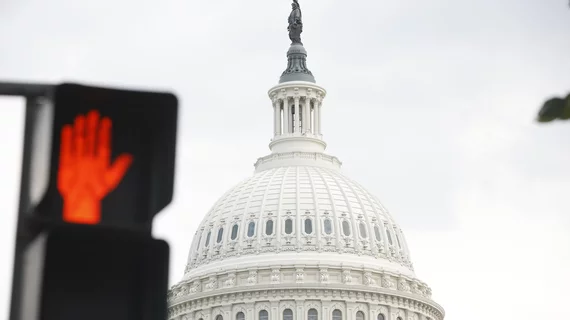
A key committee of the U.S. House of Representatives has voted to halt a controversial prior authorization pilot program that’s impacting certain radiology services.
Lawmakers on Tuesday opted against authorizing funding for the Wasteful and Inappropriate Service Reduction (or “WISeR”) Model, citing concerns it will overburden both patients and providers. Launched Jan. 1, WISeR uses artificial intelligence to root out misuse of a dozen services—across interventional radiology and other specialties—in six states.
However, the House Appropriations Committee has now moved forward with a budget amendment that would pull funding for the pilot.
“The committee believes that any proposal to impose prior authorization requirements in traditional Medicare should be subject to robust congressional oversight and transparent evaluation of impacts on beneficiary access to care, provider burden and program costs,” the June 9 amendment reads.
Lawmakers said they are now requesting that the Centers for Medicare & Medicaid Services provide an update for fiscal year 2028, justifying the need for the program. They want the agency to outline the impact of WISeR on patients, along with how the six states—New Jersey, Ohio, Oklahoma, Texas, Arizona and Washington—were selected for participation. Representatives emphasized that “none of the funds made available in this act” may be used for “any such model that implements prior authorizations in traditional Medicare.”
The amendment still needs to make its way through the full House and Senate before being finalized.
More on WISeR
First introduced last June, WISeR has targeted services including image-guided decompression of the spine, epidural steroid injections for pain management (excluding facet joints), and percutaneous vertebral augmentation. The latter, also known as PVA, uses X-ray guidance to inject bone cement into the fractured vertebrae.
CMS has partnered with for-profit technology vendors, who utilize AI to pinpoint healthcare services the feds say are often subject to abuse. The agency in November announced six participants in the pilot (one for each state), including radiologist-owned technology company Humata Health.
Both politicians and providers have expressed strong opposition to WISeR since its inception. The Society of Interventional Radiology in September charged that the program would delay essential care, potentially posing harm to seniors. Amid some of these concerns, CMS in April said it was delaying implementation of WISeR for percutaneous image-guided lumbar decompression for spinal stenosis.
Senate Democrats also attempted to roll back the “AI care denial experiment” in May, introducing a resolution to utilize the Congressional Review Act.
“Americans are sick and tired of abusive prior authorization tactics putting needed healthcare out of reach,” Sen. Ron Wyden, D-Ore., said in a statement May 20. “The last thing seniors need is even more AI denying the care they need.”

Marty Stempniak has covered healthcare since 2012, with his byline appearing in the American Hospital Association's member magazine, Modern Healthcare and McKnight's. Prior to that, he wrote about village government and local business for his hometown newspaper in Oak Park, Illinois. He won a Peter Lisagor and Gold EXCEL awards in 2017 for his coverage of the opioid epidemic.