
Government shutdown likely to impact imaging services, American College of Radiology warns
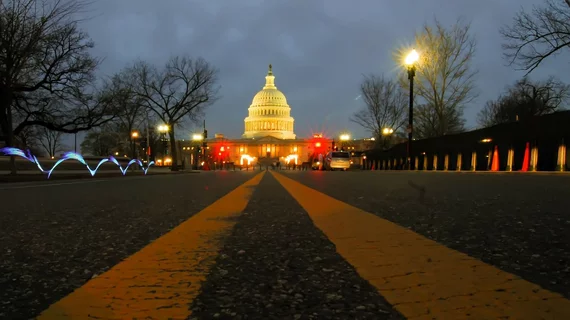
The government shutdown is likely to impact imaging services, the American College of Radiology warned Wednesday.
Congress had faced a midnight deadline Tuesday to reach an agreement on federal funding, with insurance premium tax credits provided by the Affordable Care Act a key sticking point. ACR said it plans to provide continuing updates to the specialty, as developments occur.
Medicare payments will be put on a 10-day hold, with about 53% of CMS staff retained, and rulemaking at the key agency is likely delayed. ACR urged radiology providers to continuing submitting claims as usual, also noting that Medicaid remains funded through March.
“The situation remains fluid,” the college—which represents over 40,000 diagnostic and interventional radiologists, nuclear medicine specialists, radiation oncologists and medical physicists—said in an Oct. 1 news update. “Federal agencies are affected differently based on their funding sources and available reserves.”
Meanwhile, at other agencies, according to an ACR update gathered from the web:
- Food and Drug Administration (FDA): Mammography Quality Standards Act certification remains operational, with the agency planning to update ACR on any status changes. Other safety-related activities, and those funded by carryover user fees, also continue, though new drug and device submissions requiring payment are paused. Currently, about 86% of FDA staff remain retained.
- National Institutes of Health (NIH): Conversely, only about 26% of staff has stayed on at the grant funding agency, with reviews, new awards and most meetings paused. However, operations at the Advanced Research Projects Agency for Health (ARPA-H)—which falls under HHS, making investments in breakthrough technologies—continue, using balances from prior appropriations.
- Centers for Disease Control and Prevention (CDC): Public health communications and most other activities are paused, with certifications of physician participants pending under the B Reader Program. About 36% of CDC and other related agency staffers remain retained amid the shutdown.
- Department of Veterans Affairs (VA): Medical care and critical services continue, ACR noted, as about 97% of VA employees remain funded or exempt from furloughs.
- Nuclear Regulatory Commission (NRC): Most activities remain funded through fees, though some functions could be curtailed, the college reported. Medical licensees should continue to monitor communications from the agency, which is responsible for licensing and regulating civilian use of nuclear energy and materials.
Telehealth flexibilities
Many staffers from these agencies may be left unable to travel or attend events, ACR added. In addition, certain telehealth flexibilities, granted in the Medicare program amid the COVID-19 pandemic, also are impacted by the government shutdown after lapsing on Oct. 1.
For instance, telehealth use for certain evaluation and management (E&M) services is now limited to rural areas, as was the case before the public health emergency. Same for the ability to provide audio-only services to Medicare patients and those treated through the Acute Hospital Care at Home program, which has now lapsed, ACR said in a separate news update.
The shutdown will not impact the interpretation of imaging studies handled by teleradiologists, which remains covered by the Medicare program. But ACR said it expects the expiration of these telehealth flexibilities to impact interventional radiologists, radiation oncologists and nuclear medicine specialists, who typically bill for E&M services.
“It is important to note that regulations allowing remote supervision of diagnostic tests (including remote supervision of contrast administration) using audio/video real-time communications technology through Dec. 31, 2025, are not impacted by the government shutdown,” the college reported. “The proposal to extend this flexibility permanently will be addressed in the Medicare Physician Fee Schedule final rule,” it added, with the update expected in November.
The Centers for Medicare & Medicaid Services has counseled providers, who perform telehealth services after Oct. 1, to consider providing a notice of noncoverage. CMS also is suggesting some may wish to hold such claims while awaiting congressional action.
On Wednesday, the Senate convened for a vote on a potential continuing resolution to fund the government, which failed in a 55-45 decision. This after the House had passed the proposal, which would have funded the federal government through Nov. 21, the American Hospital Association reported.
Sens. Catherine Cortez Masto, D-Nev., John Fetterman, D-Pa., and Angus King, I-Maine, sided with Republicans in favor of the bill, while Sen. Rand Paul, R-Ky., voted against it with most Democrats, AHA added. Sixty votes are needed to pass a spending bill, with additional discussions expected through the weekend. The House proposal would have extended key healthcare programs that expired yesterday including telehealth flexibilities, the association noted.

Marty Stempniak has covered healthcare since 2012, with his byline appearing in the American Hospital Association's member magazine, Modern Healthcare and McKnight's. Prior to that, he wrote about village government and local business for his hometown newspaper in Oak Park, Illinois. He won a Peter Lisagor and Gold EXCEL awards in 2017 for his coverage of the opioid epidemic.