
State amends radiation safety standards for interventional staffers
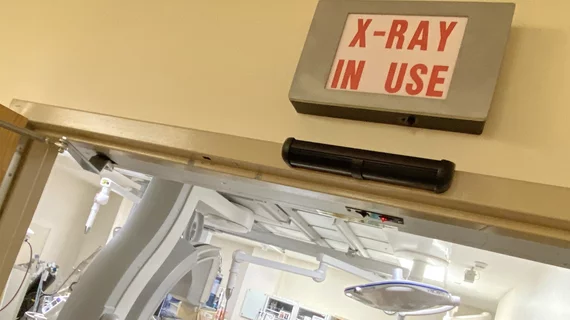
Arizona has enacted a new law that will allow hospitals to replace lead aprons with approved radiation protection systems in cardiac catheterization labs and interventional radiology suites.
The change is aimed at reducing orthopedic strain associated with traditional lead aprons while also keeping staff protected from scatter radiation in accordance with standard ALARA (as low as reasonably achievable) principles. Signed by Democratic Gov. Katie Hobbs on June 19, Senate Bill 1121 permits healthcare facilities to use alternative equipment-based radiation protection systems in place of lead aprons under specified conditions. It passed the Arizona House by a 50-2 vote, and the Senate unanimously, in a vote of 29-0.
Staff who opt to forgo lead aprons when working in the presence of approved shielding systems must wear specialized dosimeters that continuously monitor radiation exposure in real-time during procedures. Hospitals also may require additional protective equipment if radiation safety officers determine that exposure levels warrant additional shielding, while workers who prefer to continue wearing lead aprons can do so.
“The technology exists today to shield workers from radiation exposure more effectively while reducing the physical strain caused by wearing heavy lead aprons for hours at a time,” Republican state Sen. Carine Werner, the bill’s sponsor, said in a news release on the change. “When we have proven technology that can better protect the people performing these procedures every day, we should be embracing it.”
The update comes as multiple prominent medical societies, including the Society of Interventional Radiology, recently called for widespread updates to what they describe as outdated radiation protection practices. A consensus statement from the societies, released earlier in July, called for the integration of modern protective technology, updated safety standards and stronger monitoring and reporting practices. Such technology includes special shields that are engineered to attach to fluoro equipment and are readily available. They offer greater protection from scatter radiation, which reduces the need for heavy lead aprons.
“Protecting access to care means protecting the teams who deliver it,” Saher S. Sabri, MD, president of the Society of Interventional Radiology, said in a statement July 14. “Enhanced radiation protection in the angio suite is not an optional workplace upgrade but a key component of ensuring patient access to interventional radiology teams who can safely deliver these critical minimally invasive procedures. These guidelines set a clear expectation: Safer technology exists, and it should be adopted now.”

In addition to her background in journalism, Hannah also has patient-facing experience in clinical settings, having spent more than 12 years working as a registered rad tech. She began covering the medical imaging industry for Innovate Healthcare in 2021.