
A cautionary tale for radiologists reporting on rib fractures
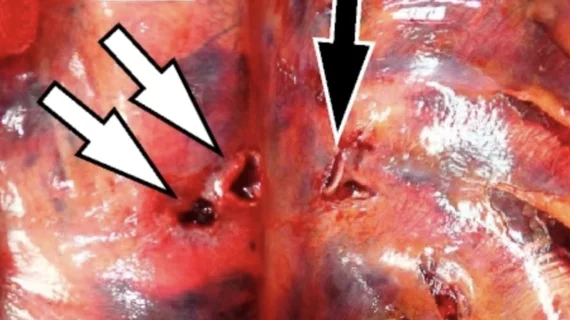
A new case study should serve as a cautionary tale for radiologists who identify rib fractures on imaging.
Published in Emergency Radiology, the fatal episode highlights the risk of delayed aortic rupture following posterior rib fractures—something radiologists and other providers need to be aware of, the authors suggested.
“Although most cases are treated conservatively, posterior rib fractures can rarely cause delayed aortic injury when a sharp fracture edge penetrates the thoracic aorta, leading to sudden massive hemothorax days after trauma,” Kana Unuma, with the department of forensic medicine at the graduate School of Medical and Dental Sciences in Tokyo, and colleagues warned. “Fractures of the left posterior 4th–10th ribs are particularly dangerous because of their close anatomical relationship to the descending thoracic and upper abdominal aorta. In patients with multiple rib fractures or flail chest, minor physiological movements, including respiration, posture changes, or slight trunk rotation, may repeatedly irritate the aortic wall, resulting in progressive vascular injury and eventual catastrophic rupture.”
Researchers described the case of a patient who was initially managed conservatively after a fall because he remained hemodynamically stable, though he sustained a posterior left eighth rib fracture during the fall. However, the patient suddenly collapsed and died on the 10th day of hospitalization. An autopsy revealed that a sharp rib fragment had perforated the descending thoracic aorta, causing a fatal full-thickness rupture.
A retrospective review of the patient's CT scan showed the fractured rib fragment was in extremely close contact with the aortic wall; at the time though, the finding was not recognized as clinically significant. Histopathology also demonstrated partially organized injury to the aortic adventitia, providing evidence of repeated contact between the rib fragment and the vessel wall before rupture.
The authors cautioned that their findings highlight the potential for posterior left lower rib fractures to lead to delayed, life-threatening aortic injuries even when patients appear stable. They suggested that CT findings showing fracture fragments adjacent to the descending aorta should prompt heightened clinical vigilance and consideration of surgical management, rather than routine conservative treatment alone.
“Posterior left lower rib fractures may warrant consideration for surgical intervention, both for emergent and even prophylactic purposes,” the authors wrote. “This case provides unique pathological and clinical insights into a rare but lethal complication of blunt thoracic trauma, expanding current understanding of delayed aortic injury due to posterior rib fractures.”
Read more here.

In addition to her background in journalism, Hannah also has patient-facing experience in clinical settings, having spent more than 12 years working as a registered rad tech. She began covering the medical imaging industry for Innovate Healthcare in 2021.