
Diagnostic radiology sees significant uptick in residency applications
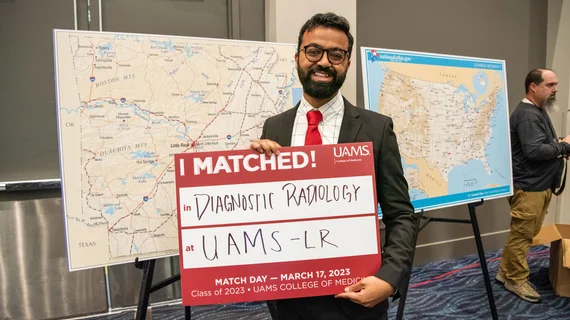
Diagnostic radiology has seen a significant uptick in residency applications over the last five years, though recent changes may be cooling interest, according to new research published Friday.
Between 2020 and this year, the total number of individuals applying into the specialty increased by about 9.4%. At the same time, the number of diagnostic radiology (DR) positions offered by residency programs via the annual “match” leapt by 11.3%, researchers detailed in JACR.
Diagnostics has seen significant interest from students in recent years, experts note, given its high pay, perceived work-life balance and the ability to work from home.
“Data indicates that applicants are applying to an increasing number of programs each year in all specialties including in DR,” corresponding author Ajay Malhotra, MD, with the Yale School of Medicine’s radiology department, and colleagues wrote. Oct. 3. “Students feel compelled to submit a high volume of applications to get more interview invitations and remain competitive. This has been further compounded by virtual interviewing since 2020, which has removed the financial burden of actually visiting programs for interviews.”
However, “preference signaling,” allowing candidates to flag their desired programs, was initiated in diagnostic radiology during the 2022-2023 cycle. This was followed by new two-tiered signaling in the next residency round, “allowing candidates to show their preference for specific programs in a confidential fashion.”
Changes appear to have produced the desired effect, the analysis of Electronic Residency Application Service (ERAS) data found. Between 2020 and 2023, the average number of applications submitted per student increased by about 30.4% while the typical number of applications received per program leapt 65.8%. However, these figures fell with the introduction of preference signaling, the analysis found. This included a 15.3% drop in the number of applicants, while average application counts per individual (-11.8%) and per program (-24.1%) plummeted.
Malhotra and colleagues noted that the previous “surge” of applications to radiology programs has led to increased burden for programs and candidates. This includes administrative costs for the large number of applications, a figure that warrants added attention, given that one-fourth of program directors do not receive the full administrative time allocation mandated by the ACGME.
“The costs associated with the application process can be substantial to both applicants and programs, and recent changes to the process will hopefully reduce the recruitment costs,” Malhotra and colleagues concluded. “Our comprehensive data on application and match trends will inform and empower all participants including applicants and residency programs while optimizing the overall process,” they added.
Read much more, including potential study limitations, in the Journal of the American College of Radiology.

Marty Stempniak has covered healthcare since 2012, with his byline appearing in the American Hospital Association's member magazine, Modern Healthcare and McKnight's. Prior to that, he wrote about village government and local business for his hometown newspaper in Oak Park, Illinois. He won a Peter Lisagor and Gold EXCEL awards in 2017 for his coverage of the opioid epidemic.