
Match Day 2026: Radiology programs offer more positions than ever, but applicant pool declines

Friday marks Match Day 2026, with radiology programs offering more positions than ever while the applicant pool continues to contract.
This year, imaging training programs offered a total of 1,478 positions across diagnostic and interventional radiology. This represents a nearly 5% increase from the 1,412 seen in 2025, according to data released March 20 by the National Resident Match Program.
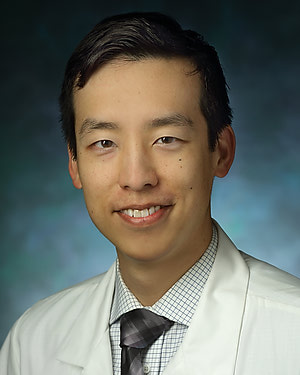
However, like last year, the number of applicants has shrunk, notes Francis Deng, MD, a Baltimore-based radiologist, researcher, and former NRMP board member. In 2026, there were 1,741 postgraduate, year 1 (PGY-1) diagnostic radiology applicants, down about 1% from last year or 14% over a three-year period.
Radiology recorded a fill rate of 97.6%, down slightly from the 98.4% clip seen in 2025.
“Radiology applicants continue to decline in number since the specialty’s recent peak in 2023 [2,014], and residency positions continue to increase gradually, resulting in a slightly lower position fill rate this year,” Deng told Radiology Business by email Friday. “Radiology remains a competitive and desired specialty, where the number of applicants is greater than the number of available positions, and most positions are filled by U.S. medical students.”
Interventional radiology saw slightly higher growth, offering about 18% more positions than last year (202 vs. 238) or 42% more than 2022. Meanwhile, diagnostic radiology added an additional 31 positions, rising nearly 3% over last year’s total of 1,210. The 1,241 DR positions represent a nearly 10% jump from the 1,132 seen in 2022.
| Year | DR positions offered | IR positions offered | % radiology positions filled | % radiology positions filled by US medical students | PGY-2 DR applicants |
| 2026 | 1,241 | 238 | 97.6% | 81.5% | 1,741 |
| 2025 | 1,210 | 202 | 98.4% | 82.8% | 1,759 |
| 2024 | 1,165 | 188 | 99.5% | 83.4% | 1,880 |
| 2023 | 1,151 | 176 | 99.8% | 83.4% | 2,014 |
| 2022 | 1,132 | 168 | 99.9% | 86.1% | 1,850 |
Deng noted the numbers signal that demand for radiologists continues to grow, driven by an aging population and higher per-patient imaging utilization, particularly for MR and CT. Artificial intelligence does not appear to have brought substantial productivity increases to the specialty.
Applicant interest in radiology tends to fluctuate over time, Deng added. Recent dips in application counts may owe, at least in part, to uncertainties over the future impact of AI on the specialty and the overall economics of radiology. Because of expanding programs and decreasing applicant numbers, the percentage of positions that are filled is dropping. This year’s fill rate was 97.6%, down from the nearly 100% rate seen in 2022-2024.
This year saw 35 unfilled positions across radiology, including 10 on the interventional side (4 postgraduate year 1, 6 PGY-2) and 25 in diagnostics (8 PGY-1 and 17 PGY-2). Most will likely be filled in the Supplemental Offer and Acceptance Program, Deng noted, though those numbers have not yet been released. That’s not to mention there were a handful of unfilled “physician (R)” positions intended for prior graduates (not current students) that start the program this July.
“On the positive side, this is still a relatively high fill rate. Radiology remains a moderately competitive and desired specialty, where applicant interest is well-matched to available positions,” Deng added.
More on match data
Overall, this year’s 2026 Main Residency Match saw a total of 48,050 active applicants, representing a 1.8% increase from last year. They competed for 44,344 total positions, a 2.6% year over year increase. NRMP said the turnout demonstrated “continued strength in residency placement,” with over 93% of positions filled nationwide.
Applicants learned at noon Eastern Time on Friday where they would begin their medical training and took to social media to share the results. Matching is a momentous occasion, marking the beginning of a new chapter in life after years of study and clinical experience.
“Every year, we look forward to sharing Main Residency Match outcomes and celebrating the hard work and achievements of thousands of students and graduates from across the country and the world,” NRMP President and CEO Donna L. Lamb, MBA, said in a statement March 20.
U.S. MD seniors continued to represent the largest applicant group this year with 20,934 applicants, up 566 over the previous years with a PGY-1 match rate of 93.5%. Meanwhile, U.S. DO seniors achieved their highest such match rate on record. There were 8,503 active applicants, up 111 over last year with a match rate 0f 93.2%.
U.S. citizen international medical graduates accounted for 4,210 active applicants, a decrease of 377 from last year. However, their match rate rose to 70%, the highest on record and a figure that continues to trend upward. Non-citizen IMGs accounted for 11,944 applicants, up 479 year over year. But their PGY-1 match rate fell to 56.4%—the lowest level seen in five years.
“IMGs play an important role in the U.S. physician workforce, and recent federal immigration policy changes have increased attention to visa sponsorship considerations in residency recruitment for foreign-born candidates,” the NRMP noted.
Examining differences between applicants who require visa sponsorship and those who do not provides further insight, the program noted. For instance, foreign-born IMGs requiring visa sponsorship had a match rate of 54.4%, a five-year low. That compares to 67.9% for foreign-born IMGs not requiring a sponsorship (U.S. permanent residents), a five-year high. The highest match rate for foreign-born IMGs requiring a visa occurred in 2023 at 59.1%, while foreign-born IMGs not requiring a visa peaked this year.
“These data highlight how broader policy conditions could shape future Match outcomes for non-U.S. citizen IMG candidates and inform future recruitment strategies of programs,” the NRMP noted.
The program has more on match trends, including detailed data tables, in its announcement.
In other specialties, primary care continues to maintain strong participation, while family medicine has faced increasing challenges attracting students. This has raised questions about current training pathways, with NRMP convening a Blue Ribbon Panel of Family Medicine leaders and stakeholders to examine waning student interest. Emergency medicine, meanwhile, continues to face yearly fluctuations, while interest in psychiatry remains robust, the NRMP added.
Chelsea Schmitt, MD, MPH, chair of the American College of Radiology Resident and Fellow Section, shared advice for newly matched residents in a blog published Thursday. She recalled from her own experience that “no one expects you to know everything” on Day 1. Schmitt contends that “how you approach your first year” matters much more than proving how much information you have retained leading up to that point.
“Matching into radiology residency is a tremendous achievement,” Schmitt wrote. “The years of hard work that brought you through medical school and the residency application process culminate in this defining moment. Match Day shapes the next phase of your training and sets the stage for your career as a physician. While it’s a time to celebrate, it’s also a time to look ahead.”

Marty Stempniak has covered healthcare since 2012, with his byline appearing in the American Hospital Association's member magazine, Modern Healthcare and McKnight's. Prior to that, he wrote about village government and local business for his hometown newspaper in Oak Park, Illinois. He won a Peter Lisagor and Gold EXCEL awards in 2017 for his coverage of the opioid epidemic.