
Smartwatches reduce physician burnout while improving resilience
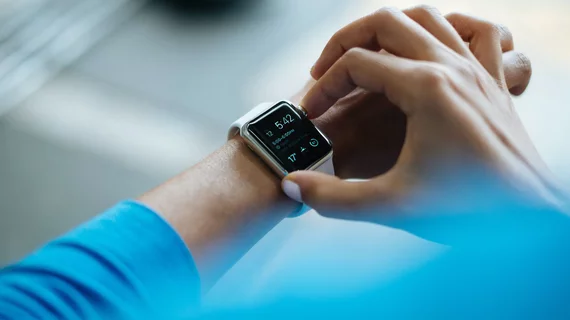
Wearing smartwatches appears to reduce physician burnout while improving resilience, according to the results of a recent randomized clinical trial.
Such workplace exhaustion remains rampant among radiology and other specialties, potentially leading to medical errors, turnover and reduced hours. However, despite burnout’s prevalence, few randomized studies have been conducted to assess possible solutions, experts wrote Aug. 18 in JAMA Network Open.
Researchers recently aimed to test how smartwatches might impact this problem. They theorized that granting access to physiological data such as sleep duration, step count and heart rate could improve physician well-being. The intervention appears to be paying off, with lower burnout among watch users and higher resilience scores after six months.
“Because this intervention was individually focused, it should be considered as an evidence-based strategy to immediately support physicians while other longer-term initiatives address the systemic factors contributing to high work stress among physicians,” Liselotte N. Dyrbye, MD, chief well-being officer with the University of Colorado School of Medicine, Aurora, and co-authors concluded.
Researchers conducted the randomized clinical trial at the Mayo Clinic and Colorado during the year ending in June 2024. The study included a total of 184 physicians, with half randomly assigned to wear a watch and track their results. Burnout, resilience, quality of life, depressive symptoms, stress and sleep patterns all were measured using previously validated scales. Participants including radiation oncologists, neurologists, anesthesiologists and emergency medicine specialists (but no radiologists) completed surveys every three months.
Baseline levels of well-being were similar for the two groups at the outset of the study. However, at six months, about 41% of those in the smartwatch group had burnout versus nearly 51% for those who didn’t use one. Average resilience scores—as measured by the Connor-Davidson Resilience Scale, which uses a 40-point scale—also were higher for physicians who wore a watch (31.9) compared to the control group (29.5).
When adjusting for various mitigating factors, burnout remained lower and resilience higher for the watch-wearing group, the study discovered. Docs had an estimated 54% reduction in the odds of overall burnout following the intervention. This, the authors noted, could lead to “meaningfully lower” rates of errors, malpractice litigation, turnover and lost productivity.
“However, no statistically significant difference was seen in quality of life, depressive symptoms, stress or sleepiness between the trial arms at 6 months, suggesting wearing a smartwatch and having access to its collected data does not lead to global improvements in well-being,” the authors cautioned. “Rather, wearing a smartwatch shows promise as an individual strategy to mitigate burnout and improve resilience, and it should be coupled with other individual and organizational efforts to address well-being more broadly.”
Read more, including potential study limitations, in JAMA.

Marty Stempniak has covered healthcare since 2012, with his byline appearing in the American Hospital Association's member magazine, Modern Healthcare and McKnight's. Prior to that, he wrote about village government and local business for his hometown newspaper in Oak Park, Illinois. He won a Peter Lisagor and Gold EXCEL awards in 2017 for his coverage of the opioid epidemic.