
New mammogram policy: Maryland to require BAC notifications with first law of its kind
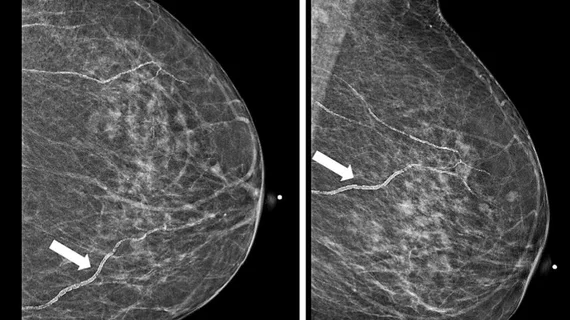
Maryland is set to become the first U.S. state to enact reporting standards relative to the presence of breast arterial calcifications (BACs) on mammograms.
On mammograms, BACs appear as thin white lines that trace the track of arteries throughout the breast. The finding itself does not pose a risk with respect to breast cancer. However, BACs on mammograms have long been implicated in cardiovascular risk. This has prompted calls from numerous leaders in the women’s health and radiology industries to call for mandated reporting on the presence of BACs on mammograms.
Now, new legislation will make that a reality, as lawmakers in Maryland have passed HB 1364—a bill that will require mammogram providers to inform patients of the presence of BACs on their mammogram. The bill was first proposed in February of this year by House Delegates Pena–Melnyk, Alston, Bagnall, Cullison, Guzzone, Hill, Hutchinson, S. Johnson, Kaufman, Kipke, Lopez, Martinez, Reilly, Rosenberg, Ross, Taveras, White Holland, and Woorman. After one round of amendments, the legislation passed both the House and the Senate unanimously.
The legislation stipulates that providers must report on the presence of BACs on their mammogram, which is standard practice for most radiologists, and inform patients via letter, similar to how the U.S. Food and Drug Administration requires providers to notify women of their breast density.
Experts in opposition
Although the bill was met with unanimous support from lawmakers, it faced resistance prior to its April 11 passing. A group of breast radiologists with Johns Hopkins Medicine expressed “strong opposition” for the bill’s contents.
“While we share the legislature’s commitment to advancing women’s health, we believe this legislation is premature, not adequately supported by the current evidence base, and risks undermining the primary purpose of mammography: the early detection of breast cancer,” the group wrote in a letter to lawmakers. The doctors also noted that, unlike density notifications that trigger defined follow-up protocols, there is “no established clinical pathway for patients notified of BAC.”
The group contends that BAC reporting should not be governed by a one-size-fits-all approach, but rather that radiologists should be allowed to use their best clinical judgement to determine whether the findings warrant additional consideration by the patient and their primary care providers.
HB 1364 now will head to the Governor’s desk to be finalized. It is set to take effect starting on October 1, 2026.
Read more here.

In addition to her background in journalism, Hannah also has patient-facing experience in clinical settings, having spent more than 12 years working as a registered rad tech. She began covering the medical imaging industry for Innovate Healthcare in 2021.