
State law change allows technologists to administer contrast under remote supervision
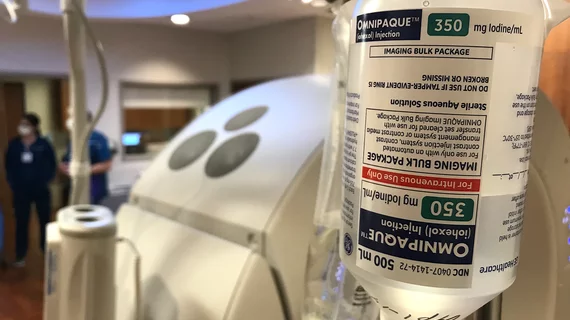
The state of California has amended a portion of the Radiologic Technology Act that addresses the requirement for physicians to be on-site when technologists administer contrast to patients.
The update eliminates the requirement for a physician to be on-site and now allows techs to perform venipuncture and conduct contrast administration under remote supervision. This change now requires a physician “to either be physically present within the facility and immediately available to intervene or available immediately via audio and video communication with access to the patient’s medical imaging records and have the ability to intervene by directing other onsite personnel.”
Facilities that provide such services must have protocols in place to ensure patient safety in the event of an adverse reaction to contrast. If facilities do not have a licensed physician or surgeon available, they are required to have other personnel who hold the appropriate license to respond under the guidance of a remote physician.
Contrast supervision is a highly debated topic among the medical community. While some such as the California Radiological Society, which sponsored Assembly Bill 460, contend remote supervision will increase patient access and reduce bottlenecks, others, such as the California Society of Radiologic Technologists (CSRT), are concerned about the potential consequences.
“As the association for the medical imaging and radiation therapy profession in California, the CSRT is concerned by the lack of requirements for a provider to be on-site during intravenous contrast procedures,” President Will Edmunds said in a public statement on the matter in March. “While rare, life-threatening adverse reactions may occur during the administration of intravenous contrast. As such, it is crucial to the safety and well-being of the patient that the physician providing general supervision, or another qualified provider, be on-site to provide assistance in case of an emergency.”
Edmunds suggested that the proposed changes could endanger patients. He is not alone in his apprehension, but despite his and others’ calls to stop the amendment, Gov. Gavin Newsom signed the changes into law on October 7.
Read more about AB 460 here.

In addition to her background in journalism, Hannah also has patient-facing experience in clinical settings, having spent more than 12 years working as a registered rad tech. She began covering the medical imaging industry for Innovate Healthcare in 2021.