
Using chest X-rays for triage could reduce lung cancer overdiagnoses
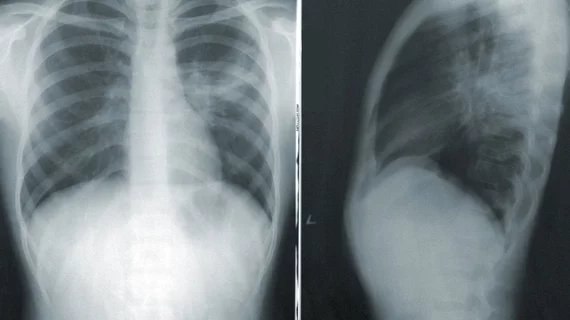
Chest X-rays could be the key to mitigating the issue of overdiagnosis in certain patient populations undergoing lung cancer screening.
Lung cancer diagnosis rates have risen in recent years, particularly among the Asian population. The increase is not exclusive to smokers and has been observed in individuals with no smoking history as well. These changes have led to an uptick in patients seeking low-dose CT (LDCT) lung cancer screening and, consequently, a rise in overdiagnosis, researchers write in Academic Radiology.
“The high prevalence of subsolid nodules in Asian populations has raised significant concerns about overdiagnosis, overtreatment, and patient anxiety," Fu-Zong Wu, with the Department of Radiology at Kaohsiung Veterans General Hospital in Taiwan, and colleagues explained. "This issue is particularly pronounced in countries such as China, Taiwan, and South Korea," they added.
The group hypothesized that chest radiographs could be used to triage patients seeking lung cancer screening. They tested their theory by retrospectively analyzing the cases of over 500 lung cancer patients who underwent either LDCT alone or LDCT in addition to a chest X-ray within three months of their lung cancer screening. Primary outcomes included lung cancer prognosis, relapse and histopathologic spectrum of lung adenocarcinoma, as confirmed by surgical pathology.
In the LDCT-only group, 37% of resected lesions were determined to be adenocarcinoma in situ or atypical adenomatous hyperplasia, both of which are considered precancerous in nature and can be treated via thoracoscopic surgery. In the X-ray triage group, none of the subsolid nodules less than 3 cm in size turned out to be adenocarcinoma in situ or atypical adenomatous hyperplasia. When this finding was compared to disease-free survival and relapse rates between both groups, researchers did not observe a significant difference. This suggests that chest X-rays could be used to triage patients prior to undergoing LDCT, potentially reducing overtreatment without impacting prognosis, the authors suggested.
“In Asian populations, particularly among nonsmokers, lung cancer screening tends to increase the detection rate of stage 1 and even stage 0 cancers, resulting in a ‘stage shift,’ whereby cancers are diagnosed at earlier stages,” the group noted. “While this shift is a desired outcome of screening—indicating earlier detection and improved treatment opportunities—an excessive focus on detecting early-stage lesions may inadvertently increase the risk of overdiagnosis, thereby compromising the overall quality and effectiveness of the screening program.”
Read more about the findings here.

In addition to her background in journalism, Hannah also has patient-facing experience in clinical settings, having spent more than 12 years working as a registered rad tech. She began covering the medical imaging industry for Innovate Healthcare in 2021.