
Researchers raise doubt about usefulness of premedication prior to contrast-enhanced imaging
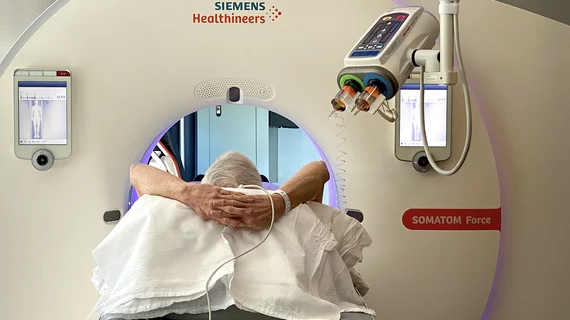
A new analysis is challenging protocols involving premedication for patients who may be vulnerable to iodinated contrast.
Historically, premedication is routinely given to individuals who have a history of hypersensitivity. But mounting evidence suggests that premedication may provide limited protection against repeat reactions to iodinated contrast media, particularly with the emergence of modern low-osmolar alternatives.
Authors of the new paper note that premedication practices originated when older ionic high-osmolar contrast media were associated with substantially more adverse reactions. However, clinically significant hypersensitivity reactions are relatively uncommon with low-osmolar agents. Previous studies on the subject have been limited by small, high-risk populations and inconsistent definitions and protocols.
“Many of the older studies used outdated classifications of symptoms and risk factors, and the key studies suffered from many limitations such as a lack of lack of sufficient statistical power, paucity of high-risk populations, significant heterogeneity in protocols and clinically relevant symptoms, and high risk of bias,” Aart J. van der Molen, MD, with the department of radiology at Leiden University Medical Center in the Netherlands, and colleagues noted.
The authors emphasized that premedication is not completely foolproof. Breakthrough reactions can still occur, including severe ones. What’s more, corticosteroids and H1 antihistamines can cause adverse effects that may contribute to longer hospital stays, additional complications and increased costs for patients and organizations. Evidence also suggests little or no protective benefit from using premedication for patients with prior moderate to severe immediate reactions or severe delayed reactions.
Changing the specific nonionic iodinated contrast medium is generally considered more effective than premedication for preventing recurrent reactions across severity levels, the authors suggested. Where possible, the group recommends selecting a contrast agent with a different chemical side chain. They acknowledged, however, that premedication may retain a limited role in emergency imaging, such as acute stroke or polytrauma, when a patient has a history of a severe reaction and there is insufficient time for an alternative evaluation.
For radiology departments, the authors argue that improving employee training in recognizing and treating contrast reactions, maintaining appropriate resuscitation equipment and accurately documenting reactions may provide greater patient safety than relying on routine premedication.
“The benefit of premedication in combination with the use of [low-osmolar contrast media] remains doubtful as the quality of the evidence is low,” the group concluded. “Prioritizing precise documentation of ICM reactions and substitution of the specific nonionic ICM to one with a different sidechain, preferably after allergologic evaluation, is generally best practice.”
Read more here.

In addition to her background in journalism, Hannah also has patient-facing experience in clinical settings, having spent more than 12 years working as a registered rad tech. She began covering the medical imaging industry for Innovate Healthcare in 2021.