
New hypertension management recs support use of interventional radiology procedure
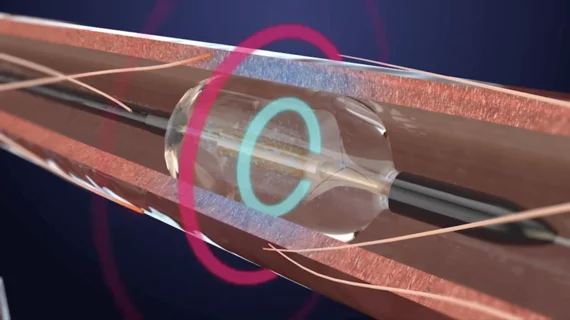
Updated recommendations from the American College of Cardiology (ACC) and American Heart Association (AHA) support the use of an interventional radiology procedure for managing uncontrolled hypertension.
Renal denervation (RDN) is a minimally invasive, catheter-based IR procedure that involves the ablation of overactive renal nerves via radiofrequency. For some patients, the reduced nerve activity has been shown to lower blood pressure as effectively as some hypertension medications.
Early research on RDN yielded mixed results. However, more recent studies that have utilized newer technologies, devices and techniques have produced more promising results, with some indicating RDN can result in sustained blood pressure reductions for 36 months or longer.
RDN use for the management of uncontrolled hypertension has increased in recent years, as the U.S. Food and Drug Administration approved two RDN systems (one from Medtronic and one from Recor Medical) at the end of 2023. Following those approvals, the American Heart Association/American Stroke Association (AHA/ASA) published a detailed statement on the use of RDN for hypertension. Though supportive of RDN in certain cases, that statement highlighted the importance of patient selection in terms of the procedure’s potential to be both effective and safe for use, as not all patients are ideal candidates for RDN.
“A multidisciplinary team approach that includes hypertension specialists and proceduralists is important both for identifying the right candidates for RDN and for following them after the procedure,” the statement read. “Both patient and clinician acceptance will be a critical factor in the widespread adoption of RDN. Efforts to educate patients and health care practitioners about how to realistically assess the benefits and risks of RDN for each individual person will be crucial for its uptake.”
AHA’s updated guidance labels RDN as a class 2b recommendation for patients who have undergone evaluations by a multidisciplinary team of providers for treatment resistant hypertension. The recommendations urge providers to be judicious in selecting patients for RDN, while also maintaining that the treatment cannot yet be considered curative.
Read the detailed recommendations here.

In addition to her background in journalism, Hannah also has patient-facing experience in clinical settings, having spent more than 12 years working as a registered rad tech. She began covering the medical imaging industry for Innovate Healthcare in 2021.