
MRI biomarker could identify patients at risk of cognitive decline post-stroke
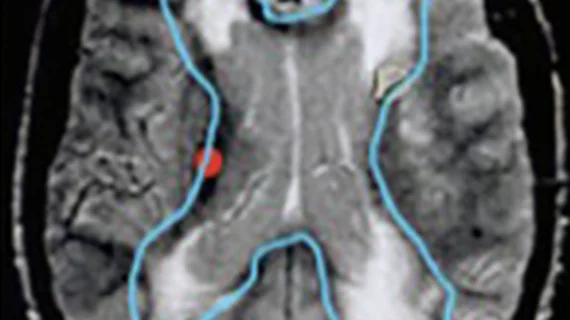
New research is offering detailed insight into post-stroke cognitive impairment, revealing that imaging biomarkers may be used to guide providers in managing patient treatment.
Published in Stroke, a journal of the American Heart Association, the study analyzed imaging data from patients who had experienced a lacunar infarction (LACI) stroke to determine whether certain findings were indicative of how patients would recover cognitively. Researchers reviewed patients’ imaging for the presence of six different biomarkers before comparing their findings alongside patients’ cognitive assessment scores. Through this, they observed consistent relationships between the extent of white matter disease (WMD) and patients’ executive function post-stroke.
“Post-stroke cognitive impairment is associated with disability and decreased quality of life," Sara Hassani, MD, MHS, with the division of stroke and neurocritical care at Northwestern Feinberg School of Medicine, Chicago, and colleagues noted. "We assessed whether individual or collective magnetic resonance imaging biomarkers can aid in predicting cognitive impairment after lacunar infarction.”
The study included data from 134 patients who participated in the American Stroke Association Bugher Small Vessel Study. Each had available MR imaging and cognitive assessments for review. Total number of LACIs (index LACI and nonindex radiographic lacunes), size of the largest lacune, ventricular size, cerebral atrophy, radiographic locations (supratentorial, infratentorial, or both) and white matter disease (WMD) extent were all compared alongside patients’ performance on the Short-Form Montreal Cognitive Assessment and the TRAIL Making Test Part B (TMT-B).
Cognitive assessments were completed around 76 days post-stroke. Imaging did not suggest scores on the Short-Form Montreal Cognitive Assessment were related to any specific MRI characteristics. The group observed a link between TMT-B times and WMD extent. However, this was the only biomarker found to be associated with executive function after having a stroke.
In a related Stroke blog by Bastien Rioux, MD, MSc, a neurologist and clinical research fellow at the University of Edinburgh, suggested the study’s findings highlight the potential for imaging biomarkers to help guide post-stroke care decisions in the future.
“In this study, the use of simple imaging markers readily accessible in several clinical settings is a strength and should facilitate external validation and replication in other data sets,” Rioux noted. “These results also identify radiological biomarkers of cognitive decline which will guide future research. These are important first steps towards a more unified prediction framework for poststroke cognitive impairment.”
Learn more about the study’s results here.

In addition to her background in journalism, Hannah also has patient-facing experience in clinical settings, having spent more than 12 years working as a registered rad tech. She began covering the medical imaging industry for Innovate Healthcare in 2021.