
Repetitive head impact in soccer players increases risk of brain damage, MRI shows
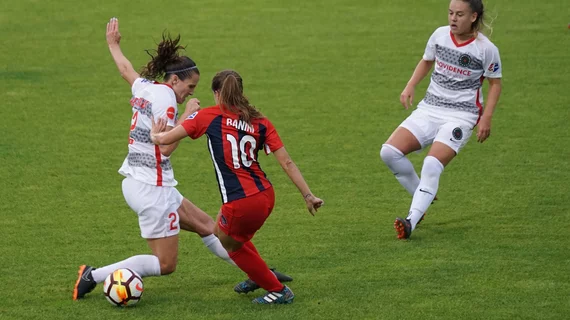
New research suggests that soccer players subjected to repetitive head impact (RHIs) from heading the ball could be at risk of brain damage on a microstructural level.
The study, which was published in JAMA Network Open, shares insights from MRI scans into how RHIs affect the orbitofrontal gray matter–white matter interface (GWI). The findings suggest that the microstructural damage observed on imaging may play a role in cognitive performance, warranting concern for athletes among experts involved in the research.
“Repetitive head impacts in sport are a growing concern given evidence that repeated low-level impacts, even in the absence of diagnosed concussion, lead to adverse effects and increased risk for neurodegenerative disease,” Michael L. Lipton, MD, PhD, with the department of radiology at Columbia University Irving Medical Center, and colleagues noted. “Soccer is the most popular sport worldwide and, in part due to the practice of heading (i.e., intentionally hitting the ball with the head), may be the greatest source of RHI.”
For their work, experts reviewed imaging and medical record data from 352 amateur soccer players ages 18 to 55 who played for at least 5 years and were currently playing for an average of 6 months at the time of the study. Participants underwent 3T MRI scans, including diffusion tensor imaging and/or neurite orientation dispersion and density imaging. Cognitive assessments gauging verbal learning and memory were also conducted so that researchers could compare participants’ performance against their imaging.
The team observed associations between increased frequency of RHIs and a less steep fractional anisotropy (FA) slope across the orbitofrontal GWI. The slope measure mediated the association of RHI with cognitive and memory assessments, suggesting that the microstructural damage visualized in the orbitofrontal GWI is likely related to poorer performance on learning tasks, the group noted.
“The orbitofrontal region, however, is not considered a key substrate of verbal learning and memory functions. Because the orbitofrontal region is implicated in executive function, planning, strategy and attention, it is plausible that effective planning and verbal learning strategies depend on orbitofrontal functions," the authors explained. "It is also plausible that orbitofrontal GWI injury leads to poorer learning strategies, in turn reflected in lower ISL score.”
The team suggested their findings indicate “specific susceptibility of the orbitofrontal GWI to RHI effects." They added that their work could benefit from future research that focuses on cognitive assessments optimized to test orbitofrontal function.
Read more about their work here.

In addition to her background in journalism, Hannah also has patient-facing experience in clinical settings, having spent more than 12 years working as a registered rad tech. She began covering the medical imaging industry for Innovate Healthcare in 2021.