
Copper-based PSMA radiotracer shines in clinical trial
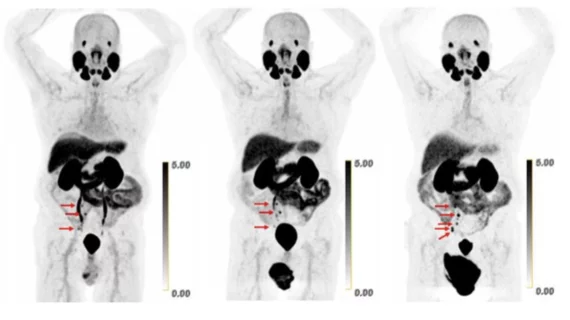
A novel copper-based PET tracer has yielded promising results for detecting metastatic disease in men with prostate cancer.
Researchers believe the copper-61 (Cu-61)-labeled agent’s extended half-life could help address some of the shortcomings that accompany prostate-specific membrane antigen (PSMA) agents currently on the market. Not only does this characteristic have the potential to expand access to vital prostate cancer diagnostics, it also could improve exam quality, experts involved in the research wrote this week in Radiology.
“Prostate-specific membrane antigen (PSMA)–targeted PET has revolutionized prostate cancer imaging, but the sensitivity at low prostate-specific antigen levels is lacking,” lead author Gary Ulaner, MD, PhD, of the Hoag Family Cancer Institute in Irvine, California, and colleagues noted. “Copper 61 (61Cu) is a positron emitter with favorable physical characteristics that allow for delayed imaging, which may result in improved sensitivity.”
The team has been studying the safety, dosimetry and efficacy of the tracer, 61Cu–1,4,7-triazacyclononane,1-glutaric acid-4,7-acetic acid (NODAGA)–PSMA for imaging and therapy (I&T), and comparing its utility to other PSMA agents. They recently conducted an analysis of a group of individuals with PSMA-avid disease who had recently undergone F-18 piflufolastat PET imaging (current standard); within 30 days of those scans, participants underwent imaging using the Cu-61-labeled agent one, two and four hours after being injected with the tracer.
Lesion detection, tracer uptake and background tissue details were compared between both sets of imaging. Through this, the team determined that the scans acquired at the 4-hour mark using Cu-61 yielded the largest number of suspected malignant lesions, highest uptake in the lesions and the lowest uptake in the background tissues. The Cu-61 scans also resulted in more lesions being detected in half of the participants.
So far, the results indicate the tracer is well tolerated, and there have been no reported adverse events related to its use during the trial. Experts are hopeful its improved sensitivity and extended half-life of over three hours make it a promising candidate for future prostate cancer diagnostics.
Learn more about the findings here.

In addition to her background in journalism, Hannah also has patient-facing experience in clinical settings, having spent more than 12 years working as a registered rad tech. She began covering the medical imaging industry for Innovate Healthcare in 2021.