
New radioummonotherapy may be more effective at treating ovarian cancer than current standard of care
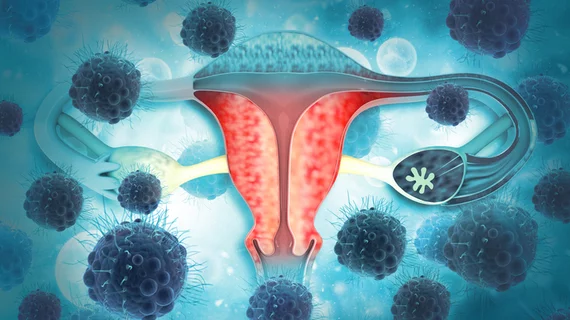
Experts have developed a new radioimmunotherapy method that may be more effective at treating ovarian cancer than the current standard of care.
The method targets cancer stem cells (CSCs), which are highly tumorigenic and known to play a significant role in relapse, cancer spread and treatment resistance. Although developing CSC-targeting therapies can be challenging, experts are especially interested in this method due to its efficacy in aggressive cancers.
Researchers detailed their efforts in a new paper published this week by the Journal of Nuclear Medicine.
“Radioimmunotherapy enables precise, target-specific delivery of particulate radiation to cancer-associated antigens while minimizing off-target accumulation and increasing tumor retention and irradiation, which makes it a promising choice for targeting CSCs,” Jürgen Grünberg, PhD, senior scientist at the Center for Radiopharmaceutical Sciences, Center for Life Sciences at the Paul Scherrer Institute in Villigen, Switzerland, said in a statement. “Our study sought to investigate the effectiveness of a new radionuclide Terbium-161 (161Tb ) for eradicating CSCs due to emission of short-ranged conversion and Auger electrons—besides beta-minus particle—successfully eliminated ovarian CSCs in contrast to Lutetium-177 (177Lu).”
For their analysis, researchers focused on CSC-associated biomarkers in ovarian cancer, targeting them via radiolabeled immunoconjugates with either 177Lu or 161Tb. The team then assessed radioimmunoconjugate quality by determining radiochemical purity and the immunoreactive fraction, while radiocytotoxicity was evaluated via measurements of cell uptake and proliferation assays. The methods were tested in mouse models.
In both assessments, cell uptake 15 hours post-administration ranged from 50% to 75%. However, the one using Terbium-161 to target ovarian CSCs showed significantly greater cytotoxicity in comparison to the current standard of care (Lutetium-177), effectively eliminating the CSCs of interest.
While the study was small and will need to be further validated, experts involved in the work expressed optimism for how their findings could impact cancer treatment in the future.
“This signifies a pivotal step toward the translation of 161Tb-based therapies into clinical application,” Tihomir Todorov, PhD, junior scientist at the Center for Radiopharmaceutical Sciences, suggested. “Targeted radionuclide therapies with 161Tb could support personalized medicine leading to advancements in cancer care including eradication of resistant CSCs and increased therapeutic efficacy alongside improved diagnosis, detection and treatment monitoring.”
The full study is available here.

In addition to her background in journalism, Hannah also has patient-facing experience in clinical settings, having spent more than 12 years working as a registered rad tech. She began covering the medical imaging industry for Innovate Healthcare in 2021.