
New theranostic could potentially cure difficult-to-treat gastric and pancreatic cancers
Researchers have developed a new theranostic technique they say has the potential to better control and possibly cure difficult-to-treat upper gastrointestinal tumors.
Published in the Journal of Nuclear Medicine, the findings suggest that targeting the well-defined and accessible biomarker claudin-18.2—a tight-junction protein overexpressed and differently exposed in certain solid upper gastrointestinal tumors—on PET imaging could help providers to better identify and quantify gastric cancer, gastroesophageal junction adenocarcinoma and pancreatic ductal adenocarcinoma. The research was conducted following the U.S. Food and Drug Administration’s approval of zolbetuximab—a gastric cancer treatment that targets the biomarker.
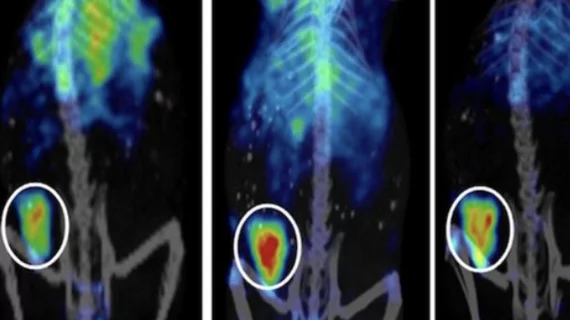
For the study, researchers developed a first-in-class claudin-18.2-targeted PET radiopharmaceutical alongside a therapeutic counterpart. The team conducted PET imaging with 89-Zr-DFO-zolbetuximab or 89-Zr-DFO-IgG on a group of murine models with both gastric and pancreatic cancer. The mice were imaged at one, three and six days after being injected with either 177-Lu-DOTA-zolbetuximab (high or low dose), non-radiolabeled zolbetuximab, 177-Lu-DOTA-IgG, 177-Lu-DOTA or saline as a treatment.
Imaging revealed higher uptake of 89-Zr-DFO-zolbetuximab at all timepoints. Mice that were injected with the high-dose 177-Lu-DOTA-zolbetuximab displayed reduced growth for both gastric and pancreatic tumors, with complete regression of most of the pancreatic cancers—a significant finding considering the high mortality rates associated with the disease.
What’s more, the injections were well tolerated; the team did not observe any radiation-induced toxicities in any of the subjects.
Shadi Esfahani, MD, MPH, nuclear medicine physician at Massachusetts General Hospital in Boston, said the findings have the potential “to meaningfully change patient care,” highlighting two ways the research contributes to a better understanding of these cancers.
"First, claudin 18.2 targeted PET imaging enables noninvasive identification of patients whose tumors strongly express this target. Second, claudin 18.2 targeted radiopharmaceutical therapy has the potential to deliver highly focused radiation directly to tumor cells, leading to significant tumor shrinkage and the possibility of improved survival,” she explained.
She believes molecular imaging-guided theranostics will become increasingly personalized in the future, likely leading to improved outcomes for patients.
Read more about the findings here.

In addition to her background in journalism, Hannah also has patient-facing experience in clinical settings, having spent more than 12 years working as a registered rad tech. She began covering the medical imaging industry for Innovate Healthcare in 2021.