
More than 20% of neuroradiologist second opinions uncover discrepancies
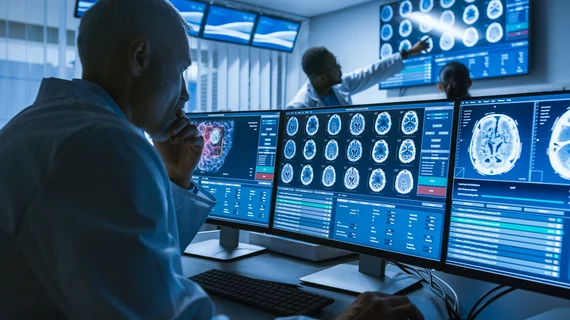
A significant number of formal requests for second opinions from neuroradiologists uncover discrepancies.
According to a new analysis published in Clinical Radiology, subspecialist neuroradiology second opinion reporting identified discrepancies in around 2 out of every 5 imaging studies reviewed at a U.K. tertiary neurology center. About 1 in 5 of those follow-up studies involved changes that impact patient management, according to a retrospective investigation.
Experts involved in the analysis believe their findings highlight the importance of subspecialist expertise, especially in neurology cases.
“Neuroradiology is particularly susceptible to diagnostic error due to the complexity of neuroanatomy, the subtlety of pathological findings, and the severity of clinical consequences that may result from misinterpretation,” Dr. Nasr Abdelsalam, with the neuroradiology department at the Walton Center NHS Foundation Trust in Liverpool, United Kingdom, and colleagues noted. They added that there is "a paucity of contemporary real-world data evaluating the clinical impact of formal second-opinion reporting.”
This prompted the team to address the gap by quantifying discrepancies between original reports and subspecialist second opinions at a major U.K. tertiary neuroscience center over a 12-month period. Researchers reviewed 580 consecutive formal neuroradiology second-opinion reports issued between April 2024 and March 2025. MRI accounted for 487 studies (84%), while CT accounted for 93 (16%). The group classified the reports as either having major or minor discrepancies or being in agreement before further categorizing them by error type using the Kim-Mansfield classification.
Overall, 245 studies (42.2%) contained a discrepancy between the referring report and the subspecialist interpretation. Major discrepancies were identified in 124 cases (21.4%), while 121 (20.9%) were classified as minor. Vascular imaging accounted for nearly half of all major discrepancies, representing 61 of 124 cases (49.2%).
Cognitive and interpretive errors were the most common, researchers determined. Faulty reasoning was identified in 109 of the 245 discrepant cases (44.5%), followed by complacency in 54 (22%), underreading in 37 (15.1%) and satisfaction of search in 28 (11.4%). The same pattern was observed among major discrepancies, with faulty reasoning accounting for 42.7%, complacency 27.4% and underreading for 21%.
The team observed significant clinical consequences in cases categorized as major discrepancies. A change in diagnosis occurred in 123 of 124 major-discrepancy cases (99.2%), while 116 (93.5%) resulted in a change in treatment and 85 (68.5%) prompted further investigation.
For radiology practices, the results highlight the potential value of subspecialty second opinions as a quality assurance and patient safety tool, particularly for challenging neurological examinations. The authors also suggest that identifying the cognitive patterns behind discrepancies could help inform targeted education and quality improvement initiatives aimed at reducing interpretive errors.
Read more here.

In addition to her background in journalism, Hannah also has patient-facing experience in clinical settings, having spent more than 12 years working as a registered rad tech. She began covering the medical imaging industry for Innovate Healthcare in 2021.