
Experts identify MRI biomarkers that may precede cognitive decline
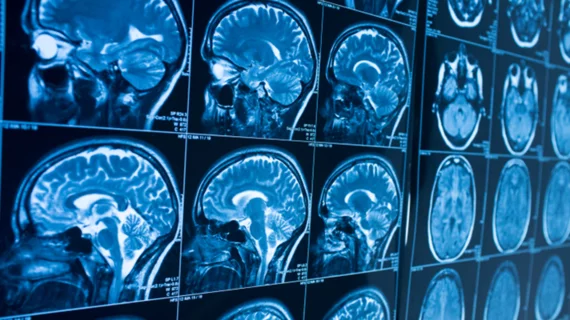
Experts have identified an MRI feature that may signal individuals are more likely to face cognitive decline in the future.
New research published this week in Radiology identifies disproportionately enlarged subarachnoid space hydrocephalus (DESH) as a potential imaging biomarker for cognitive decline in older adults. The study found that incomplete DESH was substantially more common than complete DESH among adults ages 65 and older. Although baseline imaging features were not associated with concurrent cognitive impairment, tightness of the high-convexity sulci was associated with subsequent cognitive decline over 5 to 7 years of follow-up.
“DESH comprises three key morphologic components: ventricular enlargement, with an Evans index greater than 0.3; tightness of the high-convexity sulci; and enlargement of the Sylvian fissures. These three findings are generally regarded as the core imaging features of DESH and reflect cerebrospinal fluid redistribution within the intracranial compartment,” Kana Saito, MD, with the department of radiology at Hirosaki University Graduate School of Medicine in Japan, and colleagues explained. “Although DESH is an important imaging finding for idiopathic normal pressure hydrocephalus diagnosis, many individuals do not demonstrate all three DESH features. Instead, they may show only one or two features, a presentation referred to as incomplete DESH.”
Disproportionately enlarged subarachnoid space hydrocephalus is an important finding related to idiopathic normal pressure hydrocephalus. However, less is known about whether incomplete DESH could also precede cognitive decline; this is what the research team sought to investigate.
The team evaluated baseline brain MRI scans from 2,133 participants, with a median age of 69 years. Two radiologists assessed the scans for the presence of three core imaging features of DESH. Participants were classified as having complete DESH if all three features were present, incomplete DESH if one or two features were present, or no DESH if none were present.
Only 2% of participants had complete disproportionately enlarged subarachnoid space, while 46% had incomplete DESH and 52% had no DESH. The findings indicate that imaging features associated with DESH are common in older adults even when the full imaging pattern is absent.
The researchers found no significant associations between baseline imaging features and cognitive impairment measured at the same time. However, tightness of the high-convexity sulci was associated with subsequent cognitive decline in both participants who were cognitively normal at baseline and a broader group that included those with normal cognition or mild cognitive impairment.
Among cognitively normal participants, baseline tightness of the high-convexity sulci was associated with nearly three times the odds of follow-up cognitive decline. The association was similar in the combined cohort. The combination of tightness of the high-convexity sulci and enlargement of the Sylvian fissures also was associated with cognitive decline in the combined cohort, although the association was more modest.
The findings suggest that individual MRI features may provide information about future cognitive outcomes even when complete disproportionately enlarged subarachnoid space hydrocephalus is not present. However, the group also noted that the study demonstrates an association rather than evidence that these imaging features cause cognitive decline, and further research is needed to determine their potential role in risk assessment.
Read more here.

In addition to her background in journalism, Hannah also has patient-facing experience in clinical settings, having spent more than 12 years working as a registered rad tech. She began covering the medical imaging industry for Innovate Healthcare in 2021.