
Patients produce quality ultrasound scans at home with remote assistance
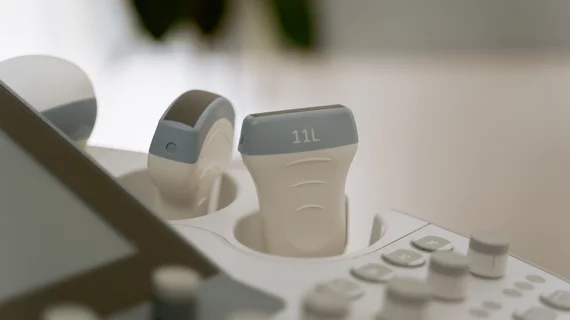
Remotely assisted at-home transvaginal ultrasound exams could expand access to critical gynecologic care, a new analysis suggests.
Transvaginal ultrasound is an invasive imaging exam, which many women have said causes significant discomfort. However, the exam is a necessary tool for multiple aspects of gynecologic diagnostics and care. Experts believe offering patients an at-home option for the test could improve imaging adherence.
“Growing telemedicine capabilities and at-home diagnostic testing have begun to improve both access to care and health outcomes in women’s health,” corresponding author Alessandra J. Ainsworth, MD, Mayo Clinic Minnesota, and colleagues wrote in their JAMA Network paper. “These novel approaches to emerging technologies in reproductive health have been well received but largely limited to virtual care and at-home blood collection," they added later. "Additional at-home diagnostic testing, including pelvic ultrasonography, is needed for comprehensive reproductive care.”
Researchers explored the feasibility of an at-home ultrasound offering for transvaginal imaging of the uterus and ovaries. To do this, they distributed kits consisting of the investigational Turtle Health Ultrasound Scanner, which included the repackaged Clarius Ultrasound Scanner, an iPhone for secure communication during the exam, plus additional necessary accessories. Women were guided during imaging via remote communication with a trained sonographer.
Of the 263 premenopausal women who participated in the project, 253 (96%) were able to record images that were diagnostic quality, while just 10 (4%) were not. Participants’ net promoter scores for the at-home exam—which indicate the likelihood of them recommending the procedure to others—were twice as high as those recorded for in-clinic assessments, at 59 compared to 24. There were no adverse events or effects reported with the at-home kits.
These findings signal that the at-home self-examinations are both feasible and safe, researchers suggested. However, it should be noted that participants success “relied heavily” on the guiding sonographer’s experience, which should be taken into consideration for practices considering such technology.
“These findings represent an innovative and clinically accurate solution to expansion of at-home care that aims to decrease barriers to care, both individual and systemic,” the group noted. “Future studies could focus on the costs of implementation and long-term use of this technology.”
Read more here.

In addition to her background in journalism, Hannah also has patient-facing experience in clinical settings, having spent more than 12 years working as a registered rad tech. She began covering the medical imaging industry for Innovate Healthcare in 2021.