
Mammography could identify millions of women in need of preventive cardiology care
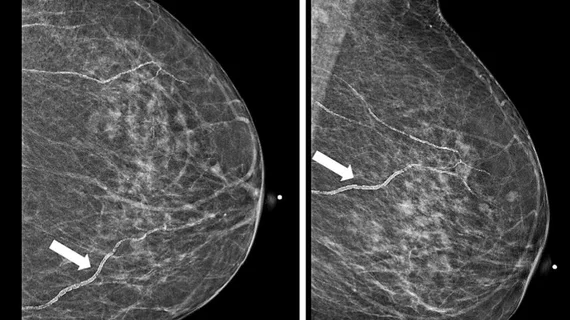
New data reveal that a significant number of women with breast arterial calcifications on imaging have no history of diagnosed cardiovascular conditions.
For many of these women, BAC on breast imaging may be the first sign that they need to explore the possibility of developing coronary artery disease. Experts say these findings could offer providers an opportunity to intervene before the condition progresses.
A new paper published June 7 in Clinical Imaging compares the presence of BAC on mammograms to the prevalence of coronary artery disease diagnoses among women undergoing breast cancer screening . While there is much talk about the relationship between BAC and the risk of CAD, less is known about how many women have calcifications on imaging but also have not been made aware of a corresponding cardiovascular diagnosis. For these women, being informed of the presence of BAC could spur critically needed tests to confirm or rule out heart disease.
“The identification of BAC may be the first cue for asymptomatic women to be encouraged to have a formal cardiovascular evaluation to find out if they have undiagnosed CAD,” Laurie R. Margolies, MD, with the department of diagnostic, molecular and interventional radiology with the Icahn School of Medicine at Mount Sinai, New York, and colleagues noted. “BAC screening could be an especially important part of women's health, as cardiovascular disease is often silent in women until the occurrence of a heart attack. In other words, women will commonly experience sudden cardiac death as the first manifestation of CAD.”
The team sought to better understand the prevalence of, and factors associated with, breast arterial calcifications in patients without a history of coronary artery disease, prior myocardial infarction or heart failure, prior stroke, atrial fibrillation or angina. To do this, they reviewed the mammograms of more than 4,300 women without any of the aforementioned diagnoses, comparing demographics and medical history to imaging findings.
Among the entire group, BAC prevalence was just over 8%. To put this into perspective, BAC prevalence in prior studies that did not account for cardiovascular history is listed at around 17%. This suggests that up to half of women with calcifications on imaging are unaware that they may potentially be at an increased risk of developing coronary artery disease.
BAC was more common among black and Hispanic women, while it was less prevalent among Ashkenazi women and those undergoing hormone replacement therapy at the time of their imaging. No associations between BAC and menopausal status, age of menarche or breast density were observed.
“Combining this 8.04% BAC prevalence rate with the 43 million mammograms performed annually, mammography could identify 3.44 million [major adverse cardiovascular events]-naïve women who could potentially benefit from preventive cardiology care,” the authors suggested.
Currently, BAC reporting is not widely mandated. Maryland is the only state in the U.S. thus far that has passed legislation that will enact BAC reporting standards. This has been a contentious topic of debate among experts, with some supporting the new law and others describing the legislation as “premature” and “not adequately supported by the current evidence base.”
Read more here.

In addition to her background in journalism, Hannah also has patient-facing experience in clinical settings, having spent more than 12 years working as a registered rad tech. She began covering the medical imaging industry for Innovate Healthcare in 2021.