
Roundtable: How Automated CT Contrast Dosing Is Making a Real Difference at an Academic Medical Center
A small step for technologists. A meaningful step toward patient-centered contrast dosing. And a benefit that can extend to radiologists.
That’s how members of the imaging team at three-hospital, 77-county Oklahoma University Health (OU Health) characterize their adoption of Smart Protocols, a software offering from Bayer in Radiology that automates CT contrast dosing and management based on site-defined parameters.
Smart Protocols integrated naturally into OU Health’s CT workflow after the imaging department upgraded the suite by replacing a Bayer MEDRAD® Stellant FLEX CT Injection System with a Bayer MEDRAD® Centargo CT Injection System.
After upgrading to Centargo and photon-counting CT in August 2025, the suite lowered its contrast baseline from 100 mL to 80 mL. Then, in April 2026, Smart Protocols helped enable a further reduction of approximately one-third, to an average of around 53 mL, by calculating each patient’s contrast dose based on body weight, contrast concentration and site-defined dosing factors—all while maintaining image quality.
“With this Smart Protocols approach, image quality has been maintained even at lower contrast doses.”
—Ben Cornwell, DO
Imaging team leaders sat down with Radiology Business to discuss their selection, implementation and day-to-day use of Centargo and Smart Protocols within their CT workflow. Each of these leaders works at OU Health’s flagship hospital, University of Oklahoma Medical Center in Oklahoma City.
The participating leaders were:
- Leiana “Nikki” Harris, manager of CT adult imaging;
- Whitney Weidner, supervising technologist;
- Nicole Lickliter, staff technologist and tech trainer; and
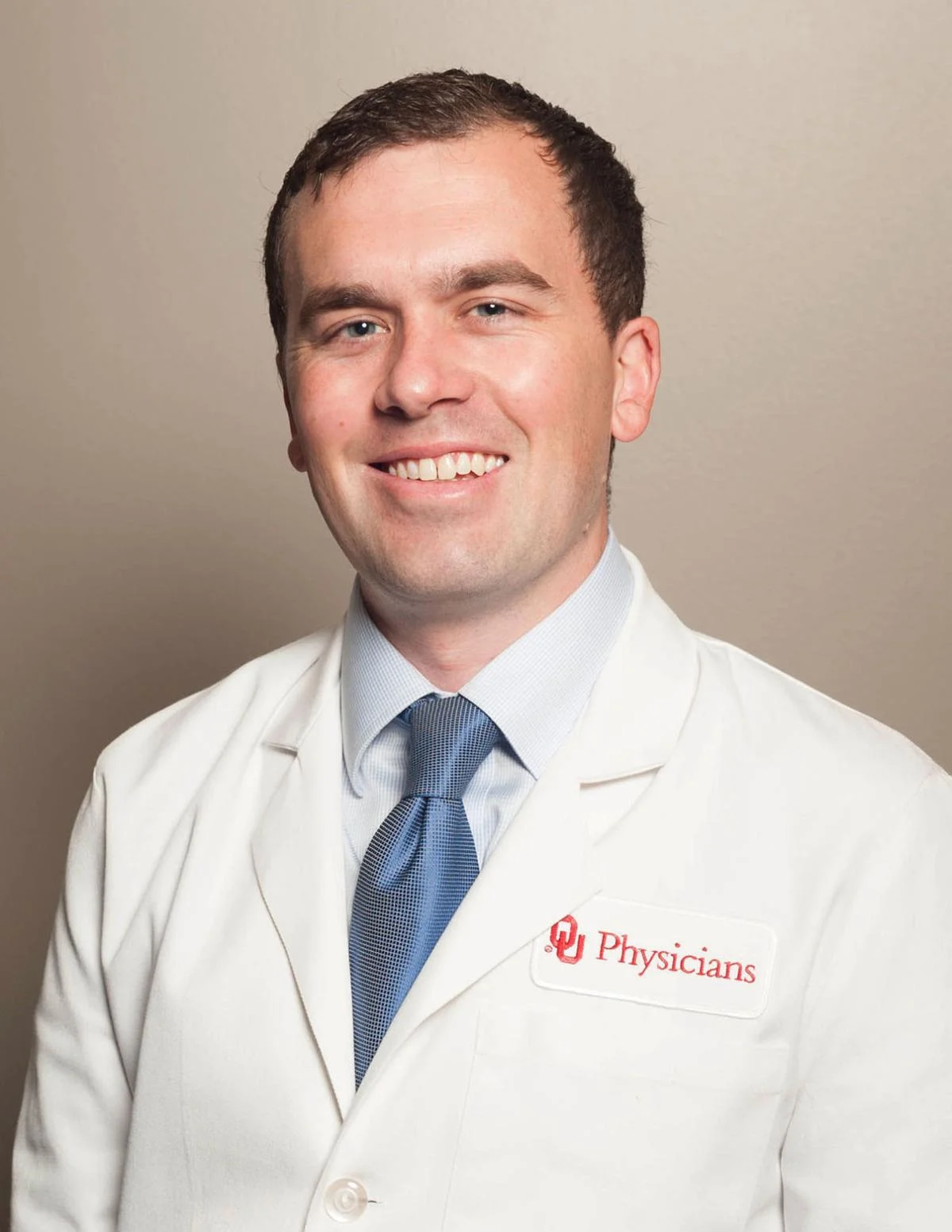
- Benjamin Cornwell, DO, chief of neuroradiology and staff radiologist.
Radiology Business: In the time since you started using your Centargo with Smart Protocols, how has the technology changed the way you work?
Nikki Harris: I had been working in this field for 20 years when we got this system. More than a year later, I’m still amazed that we no longer give a smaller patient the same dose of contrast as a 280-pound patient. Now, whether it’s a petite older patient or a bariatric adult, each one receives a contrast dose personalized to their body weight, and we can image with increased confidence.
Whitney Weidner: The multi-use injector improves workflow and saves time. Patients with reduced renal function, for whom contrast has typically been approached with caution, can now receive an individualized, often smaller amount of contrast while maintaining a more consistent image quality.
At a glance: CT Imaging at OU Health
- 14 CT scanners across seven sites
- 140,000 to 165,000 CT exams per year
- 143,295 CT exams in FY 2026; projecting 163,200 in FY 2027
Nicole Lickliter: We don’t load single syringes on the Centargo. Using contrast in Imaging Bulk Packages that connect to the multi-use Day Set, the system refills automatically after each exam. Between patients, we just change out the patient line, and the remaining contrast and saline stay in the system. For scanner-injector setups in other suites, we have to load single syringes per patient. With Smart Protocols it’s about selecting the right patient and weight, confirming the iodine dose is correct and checking with our radiologists that the scans are diagnostic.
Radiology Business: Dr. Cornwell, how have these reductions in contrast volumes affected image quality?
Ben Cornwell, DO: Giving the smallest effective contrast dose is always the goal. With this Smart Protocols approach, image quality has been maintained even at lower doses. In some cases we’ve seen improvements, such as less beam-hardening artifact from venous contrast, especially on head and neck angiograms. (Editor: Beam hardening happens when iodinated contrast in veins absorbs more lower-energy X-ray photons than higher-energy ones, causing streaks or other undesirable artifacts in images.)
I appreciate how the Smart Protocols approach gives the radiologist much less or very minimal contrast in the subclavian veins compared to our prior protocol, which has long been a source of beam-hardening artifacts. We’re definitely getting improved visualization of the arteries at the base of the neck. I would say that’s the biggest single improvement over our older protocols in terms of image quality.
Radiology Business: How about you, Nikki and team? What do you value most about Smart Protocols?
Nikki Harris: I would just say we take pride in reducing contrast for our patients. We see many trauma patients who return to the scanner multiple times for different clinical indications. We have a 200 mL daily contrast limit per patient without radiologist approval. With our average now around 53 mL per injection in that suite, we have more room within that cap when a patient needs additional exams.
“Whether it’s a petite older patient or a bariatric adult, each one receives a contrast dose personalized to their body weight—and we can image with increased confidence.”
—Leiana “Nikki” Harris, manager of CT adult imaging
Nicole Lickliter: I agree. We don’t have patients waiting in the ER as long as they used to. When a patient has incidental findings and needs additional scans, we often don’t have to make them wait before they can receive more contrast. We’re able to bring them back to the scanner sooner rather than later. They can get their CT imaging done and interpreted without delay. This means fewer patients and their family members have to wait around to hear whether they’re being admitted or discharged.
Radiology Business: Did any of you resist the change?
Whitney Weidner: At first I found it a little bit scary. When you go from injecting 100 mL of contrast for an angiography study and then Smart Protocols calculates just 37 mL, you’re initially tempted to question whether you’ll still get the enhancement you need with so much less contrast. You get past that, though. You quickly learn that you can trust the technology, because it’s calculating from the parameters our team set up for each exam’s targeted enhancement needs. These days I just like to look at what Smart Protocols is going to give and confirm it before we inject. After seeing it perform consistently many times now, I have increased confidence in it.
Radiology Business: Have you received any feedback from OU leadership or administration?
Nikki Harris: Not directly, but if they look closely they’ll like the return on investment. Along with the 33% savings in contrast reduction from Smart Protocols, we’re seeing less medical waste with MEDRAD® Centargo because we’re not discarding a syringe with every patient. All of these results matter to the CT department.
At a glance: Smart Protocols for Bayer MEDRAD® Centargo CT Injection System
- Personalized CT contrast dosing software that automatically tailors the injection to the individual patient within the injector workflow by:
- Optimizing iodine delivery for each patient based on site-defined parameters and guardrails;
- Auto-calculating and personalizing CT contrast injection parameters based on patient size, contrast media concentration and tube voltage;
- Removing dependence on manual calculations, thereby increasing the consistency of individualized injection protocols across technologists and patients; and
- Maintaining target iodine delivery rate (IDR) and iodine dose/load (IDL) across patient sizes, supporting more consistent enhancement quality than fixed contrast dosing.
- Learn more: Click here.
Radiology Business: How would you describe your relationship with the Bayer team beyond the technology itself?
Nikki Harris: Communication is open and frequent. They check in regularly. When our cardiac techs went to San Diego [for a recent conference], the Bayer team was there. All of us together, Bayer and OU Health, were honestly excited to be a part of innovations focused on personalized patient care.
We’re all on a first-name basis with one another. We consider our Bayer colleagues an important part of our team and hope they consider us an important part of theirs.
Radiology Business: Can you offer any advice to other imaging departments and practices that might be considering an upgrade in contrast injection technology?
Ben Cornwell, DO: Keep striving for better image quality. If you can improve quality while reducing contrast dose, it’s a clear win-win.
Whitney Weidner: Involve the technologists early so they understand why new technology is being used and how it works. That builds buy-in. New technology that provides technologists with additional tools to help improve patient care and prioritize safety gives healthcare workers a chance to grow professionally and personally. For many if not most of us, that’s exciting.
Nicole Lickliter: That’s a good point, Whitney. I enjoy anything involving technology. I always like learning new processes and helping others master them while always keeping patient care and safety front and center. It’s rewarding to build your experience and expand your skillset—especially when it benefits patients and improves our workflows.
Nikki Harris: Using leading-edge technology to deliver thoughtful, consistent care is rewarding. I think our whole team of technologists would agree on that. Shoutout to OU Health, and especially our AVP Bryan Alexander, for always encouraging us to try new approaches. Bryan listens to both technologists and radiologists. His support is a big reason we’re able to implement leading-edge technologies like this.
Radiology Business: Dr. Cornwell, given all we’ve just talked about, how optimistic are you about the high-tech future of your profession?
Ben Cornwell, DO: Radiology is tightly linked to technology. It’s important to evaluate new tools and confirm they work for patients. This one does—I’ve seen no downsides from the radiologist’s perspective to Bayer’s Smart Protocols.
In my opinion, contrary to popular hype, AI and other high-tech advances won’t replace any of us—they’ll help us become more efficient and accurate so we can take better care of patients.
Bayer will showcase its radiology portfolio, including Bayer MEDRAD® Centargo CT Injection System with Smart Protocols, at RSNA 2026, Booth 2514.
PP-CTD-US-0270-1 November 2026

Dave P. has worked in journalism, marketing and public relations for more than 30 years, frequently concentrating on hospitals, healthcare technology and Catholic communications. He has also specialized in fundraising communications, ghostwriting for CEOs of local, national and global charities, nonprofits and foundations.