
AI spots incidental nodules on routine chest X-rays
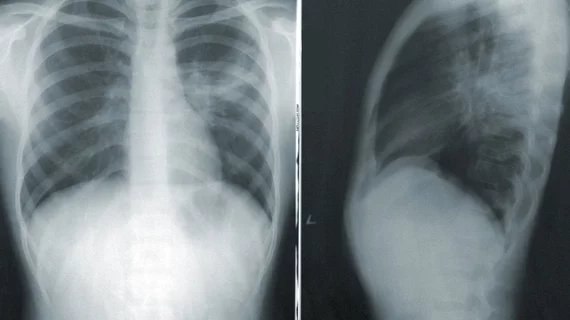
New data suggest that artificial intelligence can identify suspicious pulmonary nodules on routine chest radiographs, even when the exam is ordered for reasons unrelated to respiratory symptoms.
The findings were presented by Qure.ai and Hacettepe University, Turkey, during the IASLC World Conference on Lung Cancer 2025 being held this week in Barcelona, Spain. Experts involved in the case series suggested their findings indicate that AI could be used to improve lung cancer screening in low-resource settings or serve as a complement to low-dose CT screenings.
"By finding high-risk nodules earlier and diagnosing lung cancer at early stages, AI not only improves, but also accelerates diagnosis and treatment,” Deniz Koksal, MD, of Hacettepe University in Ankara, Turkey, said in a news release. “This enables early surgical interventions while reducing the need for more expensive treatments such as targeted therapies and immunotherapies.”
The case series included data from the CREATE study; it highlighted three cases that portray how AI can be used to flag concerning findings in patients with no prior suspicion of lung cancer. In the first case, the patient presented to the emergency department with a fever; in the second, the individual was undergoing a routine chest radiograph prior to being treated for ulcerative colitis; the third case involved an individual who was about to start a smoking cessation program, which required a baseline chest X-ray.
In all three cases, AI detected and flagged suspicious pulmonary nodules on imaging. This prompted providers to refer them for CT and biopsy, confirming early-stage lung cancer in all three patients. Each underwent surgery and was successfully treated.
Experts are hopeful this sort of technology can expand the reach of cancer screenings, leading to earlier detection of lung cancer.
“This new evidence presented at the World Conference of Lung Cancer has the potential to position every chest X-ray as a chance to save a life,” Prashant Warier, founder and CEO of Qure.ai., said in a news release on the case study. “AI can help to expand the early lung cancer detection funnel by identifying high-risk lung nodules that would otherwise go unnoticed until it’s too late.”

In addition to her background in journalism, Hannah also has patient-facing experience in clinical settings, having spent more than 12 years working as a registered rad tech. She began covering the medical imaging industry for Innovate Healthcare in 2021.