
Health system will use AI instead of radiologists for breast imaging 2nd reads
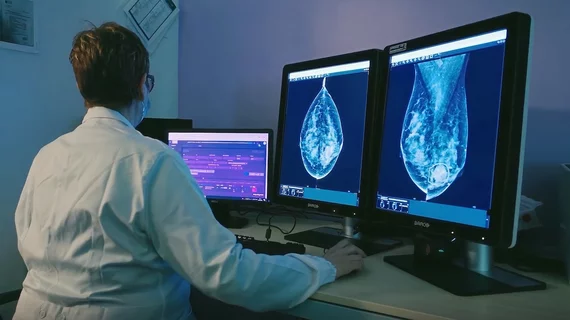
A European health system on Monday announced plans to replace radiologist second reads with artificial intelligence.
The implementation will span three hospitals in Sweden’s Stockholm Region, supporting between 200,000 and 250,000 breast imaging exams annually. Providers there plan to utilize Insight MMG—an AI-powered mammography solution from South Korean vendor Lunit—as an independent second reader at “regional scale.”
Leaders said the Stockholm deployment, executed in partnership with Sectra, follows earlier utilization in Sweden’s Dalarna County. This marks Lunit’s second region-wide rollout in the country, with institutions involved this time including Capio Saint Göran Hospital, Karolinska University Hospital, and Södersjukhuset (Sös).
Like most European countries, and different from the U.S., Sweden tasks two radiologists with independently reviewing mammograms, to help ensure care quality.
“Building on this progression from clinical research to routine implementation and real-world validation, the expansion across Stockholm Region represents an important next step," Dr. Karin Dembrower, senior breast radiologist and head physician with the department of breast radiology at Saint Göran, said in a statement Sept. 28. “It brings an approach first evaluated and implemented at a single hospital to a broader regional breast cancer screening environment.”
Lunit said the expansion follows several years of clinical and operational experience at Saint Göran, a 300-bed private, acute-care hospital on the island of Kungsholmen. One of Sweden’s oldest hospitals, use of the AI solution there progressed from prospective clinical evaluation to routine breast cancer screening. Since its initial adoption there in 2023, Lunit AI has supported around 200,000 breast exams over the last three years.
Dembrower and colleagues laid the groundwork for the region-wide deployment through ScreenTrustCAD—a prospective, population-based study at Saint Göran. The investigation evaluated the AI solution in the real-world breast cancer screening of over 55,000 women. First-year results, presented at RSNA 2024, showed a 15% increase in cancer detection and more than 36% reduction in radiologist-read times, with “normal flagging” performance contributing to these efficiency gains.
"Stockholm is a powerful example of how rigorous clinical evidence can translate into real-world adoption and ultimately broader healthcare implementation," added Brandon Suh, CEO of Lunit. "What began as a prospective clinical study has grown into routine clinical use and is now expanding to a regional scale. We believe this evidence-to-adoption journey demonstrates the role clinically validated AI can play in building more effective and sustainable cancer screening programs worldwide."
The news also comes after Berlin, Germany-based technology firm Vara recently announced it had received the world’s first approval for a breast triage tool that bypasses radiologist review for normal mammograms.

Marty Stempniak has covered healthcare since 2012, with his byline appearing in the American Hospital Association's member magazine, Modern Healthcare and McKnight's. Prior to that, he wrote about village government and local business for his hometown newspaper in Oak Park, Illinois. He won a Peter Lisagor and Gold EXCEL awards in 2017 for his coverage of the opioid epidemic.