
Cats and humans with dementia experience similar brain changes, study finds
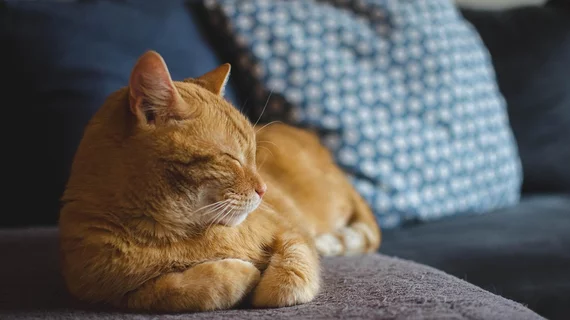
When cats get dementia, they show brain changes similar to those of humans with Alzheimer’s—mainly the buildup of amyloid-beta, a toxic protein that diminishes the connection between brain cells. The discovery was made by researchers at the University of Edinburgh, who published their findings in the European Journal of Neuroscience. [1]
Using MRI to scan the brains of cats with dementia to compare them with normal felines, the research team, led by Robert McGeachan, PhD, were able to view tissue loss in the brain over time in cats with the disease vs. those without.
In older cats that had shown signs of feline dementia before death—including crying at night, changes in sleep patterns and changes in behavior—microscopy images of brain tissue revealed there was amyloid-beta plaque within synapses that likely impacted brain function, including cognitive abilities and memory.
The team said it also found evidence of “synaptic pruning”—a process where support cells in the brain engulf synapses, contributing to their further erosion. This, too, is commonly seen in the brains of humans with Alzheimer’s disease.
Given the development of dementia in cats and humans is so similar, McGeachan and his team said, cats could be a valuable model to study dementia in humans, both in an effort to better understand the disease and to develop treatments.
“Dementia is a devastating disease—whether it affects humans, cats or dogs. Our findings highlight the striking similarities between feline dementia and Alzheimer’s disease in people,” McGeachan said in a statement.
He and the other authors added that feline dementia is poorly understood and the number of cases is likely undercounted. This research brings awareness to the specifics of how the disease impacts the brain—which in turn could benefit animals as much as humans.
An alternative to mice
As it currently stands, scientific inquiry into dementia and Alzheimer's is commonly done using rodents. However, rats and mice don’t develop dementia naturally, without genetic modification. But, just like humans, cats do.
“This opens the door to exploring whether promising new treatments for human Alzheimer’s disease could also help our ageing pets. Because cats naturally develop these brain changes, they may also offer a more accurate model of the disease than traditional laboratory animals, ultimately benefiting both species and their caregivers,” McGeachan said.
The brains of 25 deceased cats of different ages—including those with dementia—were used as the basis for the analysis. Future research is necessary to confirm the consistency of the findings.
The full study is available at the link below.

Chad is an award-winning writer and editor with over 15 years of experience working in media. He has a decade-long professional background in healthcare, working as a writer and in public relations.