
Revolutionizing stroke care in rural Alaska with AI and CT imaging
In the vast, rugged expanse of Alaska, where small villages dot a landscape, getting critical stroke care can be a race against time, terrain and long distances. But thanks to cutting-edge artificial intelligence (AI) and strategic use of CT imaging, stroke care in the state has undergone a dramatic transformation.
Lucy He, MD, FAANS, a neurosurgeon at Anchorage Neurosurgical Associates and physician sponsor of the Alaska Stroke Coalition, spoke with Health Imaging about ongoing efforts to improve stroke care in this video interview. Since joining the effort in 2018, she has helped develop a statewide stroke alert system that’s breaking down the barriers posed by geography and limited connectivity.
"Our state is the largest by landmass comparatively to any other state in the U.S., we are two and a half times the size of Texas. While our population density is the lowest, there's only about 725,000 people total in the state at the last census, only about 50% of it is within where I would consider easy access to higher level care when it comes to stroke. This means the remaining half lives spread out across the state, either in small villages that have their own clinics or smaller hospitals. The only place within the state where you could get thrombectomy services for strokes is here in Anchorage," He explained.
Stroke cases outside of Anchorage require medical evacuation (medevac) via helicopter for areas close, but mostly by fixed-wing aircraft. Due to the size of the state, medevac stroke transfers from the furthest participant hospital in Utqiaġvik to Anchorage equal the same distance between New York and Dallas, but the planes are based elsewhere in the state.
Timely and accurate diagnosis of ischemic strokes and evaluation for reperfusion are extremely important in Alaska. However, He said medevac flights come at a very high cost. She said the average cost for a stroke transfer is between $200,000 to $500,000.
Matters are further complicated by poor internet speeds preventing fast CT dataset transfers electronically. She said Alaska’s slow broadband speeds mean it can take an hour and a half or more just to transfer a DICOM CT brain dataset for review by a radiologist and neurologist in Anchorage.
These factors have made adoption of AI very important for the Alaska Stroke Coalition to help speed workflows, data transfers and to justify the high expense of transferring patients. AI has also helped improve outcomes by getting patients who qualify for revascularization under the stroke guidelines to a neuro interventional lab much faster. It has decreased the number of unqualified patients being sent to Anchorage as well, He said.
From 90 minutes or more, to instant phone alerts
The coalition adopted the RapidAI AI system, which was one of the first to market with an AI perfusion software. He said it is one of several stroke AI options, similar to others offered by Viz.AI and Aidoc.
The system is integrated into the CT scanners and the AI reads the images as a patient is scanned, before the dataset enters PACS. If a stroke is detected, the AI sends an automated alert to the stroke care team members at the local hospital and those located in Anchorage. The system uses cellular networks, which have much faster transfer speeds, so there is no need to download datasets to view them on a PACS workstation. The images and automated image reconstruction can be read directly on the phone, which He said speeds radiology and neurology reviews. This in turn offers much faster patient triage and getting efforts to transfer them underway in a short period of time, rather than delays of about two hours due to DICOM data transfer issues.
"The goal in all of this was to improve access to stroke intervention for the patients that needed it by identifying them earlier. By cutting down the time it takes to get the images from the originating hospital to the interventionists here in Anchorage, it allows access to advanced stroke imaging so we can really capture these patients within 24 hours, along with decreasing unnecessary transfers," He explained.
The AI system also delivers critical information such as vessel occlusion detection and CT perfusion maps directly to mobile devices. He said a compressed source image file is automatically uploaded to the server at that hospital. All the post-processing is done on the server itself and the team gets pinged once it is done.
"As long as we have access to the hospital site that the imaging has come through, we can see essentially what the 3D reconstructions look like. Then in the app itself we can scroll through both the axial source imaging, along with the coronal and sagittal planes. We can change the thickness of the slices so we can look in much more detail at certain areas," He said.
The app has direct messages for the entire care team, which she said speeds communications and makes it much faster than making phone calls for sending emails.
"If you can build a network for this, what's important is that now you have ease of access to imaging. And in many ways you've sort of equalized medical access when it comes to stroke. So if you tell a physician at an outside hospital three hours away, this patient is not a candidate, they feel very comfortable and confident saying, 'Hey, we're using the exact same advanced imaging that they would in Anchorage. There's nothing new or different that they would get otherwise. And those docs are telling me that if your loved one was there now with this imaging, they wouldn't qualify,'" He explained.
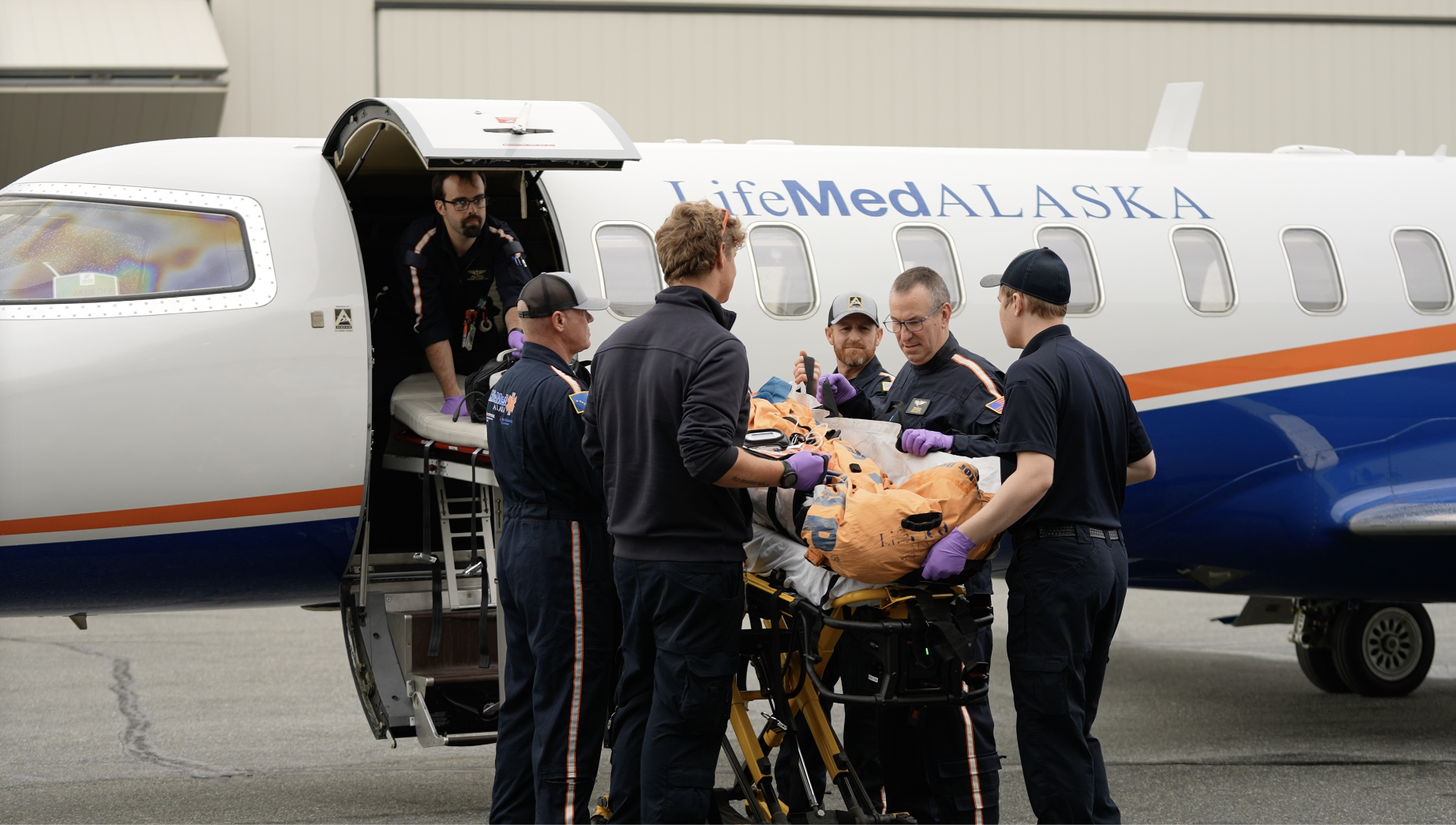
Photo courtesy of the Alaska Stroke Coalition.
Data is critical to measure outcomes and understand financial impacts
Since launching in 2016, the Alaska Stroke Program has expanded thanks to strategic funding from a private family foundation. The grant funded the installation of the RapidAI system at six rural hospitals, which were selected based on geography, volume and access needs. These hospitals now participate in the American Heart Association’s “Get With The Guidelines” registry, helping Alaska build its own stroke care database.
"One of the things that was always difficult is obviously one related to cost, especially when you're trying to sell an idea of how something is going to improve care without tangible data about how it's going to improve it," He explained. "The goal is to see what happens to our overall stroke intervention volumes here in the state and start collecting data. One of the other deficits we've had in the state is that there's no external funding for tracking inpatient stroke within the state. So, if you can't identify how large the problem is, it's very difficult then to say, 'okay, we have a big problem.'"
The Alaska Department of Health relied on the Medicare numbers that come through the national database, but they did not have detailed data. The last actual report that was written by the Department of Health in Alaska was in 2015 from 2012 data, she said. This prompted the Alaska Stroke Coalition to build its own database.
A model for remote stroke care
Alaska is not alone in facing these challenges. Similar rural stroke programs have launched in states like Mississippi and Hawaii. She said they learned a lot from those coalitions, including how to gain funding to pay for the technology they implemented from private foundations and the necessity for data to detail the need and how these programs are impacting care.

Dave Fornell has covered healthcare for more than 17 years, with a focus in cardiology and radiology. Fornell is a 5-time winner of a Jesse H. Neal Award, the most prestigious editorial honors in the field of specialized journalism. The wins included best technical content, best use of social media and best COVID-19 coverage. Fornell was also a three-time Neal finalist for best range of work by a single author. He produces more than 100 editorial videos each year, most of them interviews with key opinion leaders in medicine. He also writes technical articles, covers key trends, conducts video hospital site visits, and is very involved with social media. E-mail: [email protected]