Providers utilize business intelligence to monitor referral patterns and collaborate with clinicians who order their services. Such analytics tools have also been deployed in the specialty to improve productivity, track patient satisfaction and bolster quality.
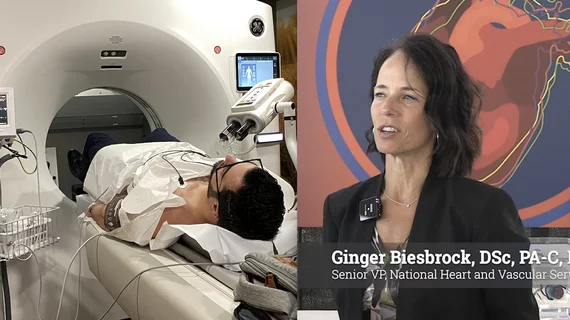
Advocates say the shift to CCTA can translate into a broader financial impacts, with some cath labs potentially seeing margin increases of as much as 40%.
RadNet Chaiman and CEO Howard Berger, MD, explains why the company has invested tens of millions into DeepHealth to rapidly build up a new business model.
The Los Angeles-based imaging group believes the move will make its DeepHealth subsidiary the “largest provider of radiology clinical AI solutions worldwide.”
The National Academies of Sciences, Engineering, and Medicine have released a report estimating $100 million will be needed for each of the next 15 years to learn how exposure to low doses of radiation affect human health.
Medical experts testifying in malpractice suits for the defense tend to have higher objective indicators of erudition than peers testifying for the plaintiff. Radiologists buck this pattern.
Comparing six dual-energy CT technologies marketed by three scanner manufacturers, radiology researchers have found all models helpful in determining the chemical composition of kidney stones even at substantially reduced radiation doses.
The Internet is an acceptable source of images for training algorithms to automatically triage patients with dislocated joints and similar orthopedic emergencies.
As FDA-approved AI software continues to proliferate in radiology—well more than 150 products to date and rising—a trio of Yale radiologists has compiled a status report focused on AI applications available to, specifically, emergency radiology.
AI can safely and accurately identify healthy breast tissue on ultrafast breast MRI, negating the need for a radiologist’s closer look and, in the process, lowering cancer screening costs and widening patient access to breast MRI.
Researchers have developed a novel cardiovascular MRI protocol as an option to the invasive gold standard, endomyocardial biopsy, for monitoring heart-transplant patients at risk of suffering organ rejection.