Providers utilize business intelligence to monitor referral patterns and collaborate with clinicians who order their services. Such analytics tools have also been deployed in the specialty to improve productivity, track patient satisfaction and bolster quality.
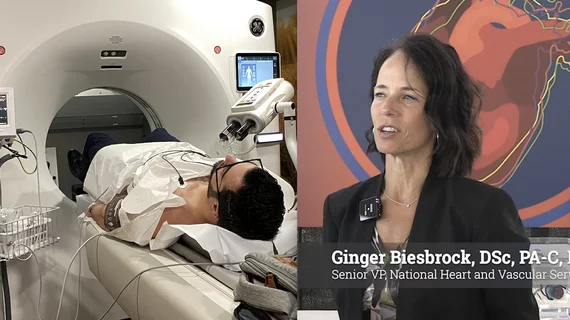
Advocates say the shift to CCTA can translate into a broader financial impacts, with some cath labs potentially seeing margin increases of as much as 40%.
RadNet Chaiman and CEO Howard Berger, MD, explains why the company has invested tens of millions into DeepHealth to rapidly build up a new business model.
The Los Angeles-based imaging group believes the move will make its DeepHealth subsidiary the “largest provider of radiology clinical AI solutions worldwide.”
A Silicon Valley AI shop has been OK’d by the FDA to market software that automatically flags suspected pulmonary embolisms (PEs) and immediately notifies physicians.
The Food & Drug Administration has drafted guidelines to help U.S. healthcare better prepare for and respond to events associated with these situations.
Iodinated contrast is most widely used in patients undergoing CT studies for, in descending order, abdominopelvic, chest, head/neck and brain indications.
Computer-aided detection boosted by AI has often proven superior to traditional CAD over the past decade, yet the “new way” has been slow to win broad adoption.
The company says the approval for ablations will allow interventional radiologists to perform these operations with nonlinear steering that facilitates high accuracy and average skin-to-target times under nine minutes.