
Nearly 1 in 5 Americans live in true imaging deserts, with no local radiologist or scanners
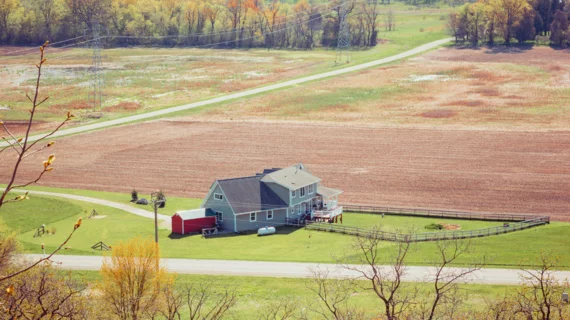
Nearly 1 in 5 Americans live in true imaging desserts, with no local radiologist or scanners, presenting opportunity for imaging providers, according to new research.
Much has been made about the adequacy of the U.S. radiologist workforce, with staffing shortfalls documented across different practice types. However, previous geographic analyses have examined the workforce and imaging infrastructure separately, experts write Oct. 2 in Academic Radiology.
Marrying the two matters is critical, since imaging interpretation and acquisition have now been decoupled, with remote readers able to fill some gaps.
“Teleradiology allows a county with imaging equipment and no identified locally practicing radiologist to receive remote interpretation of the studies its equipment can acquire,” Adyasha Pradhan, MS, a med student with the Touro College of Osteopathic Medicine in New York, and co-authors noted. “A county with neither equipment nor radiologists receives no local imaging at all, and its residents must travel for even basic studies,” they added.
Radiology researchers sought to pinpoint these true imaging deserts, using data sources including Medicare and the National Plan and Provider Enumeration System. About 54% of U.S. counties had no documented local radiologist as of June. Meanwhile, about 18% of counties were classified as true imaging deserts, without local scanners or rads, touching about 2% of the population (or 6.4 million individuals). Another 36% of counties were equipment-only deserts, representing about 8% (or 25.9 million) of U.S. residents. And finally, about 0.1% (or 19 counties) were classified as radiologist-only deserts, with no local equipment, touching about 400,000 individuals. This left 46% of geographies as “fully served,” with both local rads and equipment, representing 90% of the population (or 307.4 million residents).
Beneficiaries living in true imaging deserts saw about 6% fewer imaging events and 9% lower imaging spending than those in fully served counties. Pradhan and co-authors also explored distribution of subspecialties such as interventional, neuro, nuclear and pediatric radiology, along with body imaging. All five subspecialties only coexisted in about 6% (or 194) of counties. However, general radiologists provided substantial subspecialty-equivalent reading. About 80% of counties had no locally designated vascular/interventional radiologists, representing 81.5 million residents (or 24% of the population). Another 86% had no locally designated neurorad, 87% no body imager, 89% no nuclear specialist, and 92% were without a pediatric rad.
Experts believe their findings warrant two distinct policy approaches. Equipment-only counties likely indicate that remote interpretations are being used. However, telerads offer no solution for image-guided interventions. Remedies could potentially include loan repayment programs, rural residency expansion and expanded visa waiver pathways. Meanwhile, the 568 counties representing true imaging deserts “present a more challenging problem.”
“If capital investment in local scanners is unavailable, then greater development of organized transport and referral pathways to neighboring counties may be warranted,” the authors charged.
Read more, including potential study limitations, in the official journal of the Association of Academic Radiology.

Marty Stempniak has covered healthcare since 2012, with his byline appearing in the American Hospital Association's member magazine, Modern Healthcare and McKnight's. Prior to that, he wrote about village government and local business for his hometown newspaper in Oak Park, Illinois. He won a Peter Lisagor and Gold EXCEL awards in 2017 for his coverage of the opioid epidemic.