
FDA approves new Alzheimer’s PET imaging agent from Lantheus
The U.S. Food and Drug Administration has approved a new brain imaging agent targeted toward Alzheimer’s, drugmaker Lantheus announced Friday.
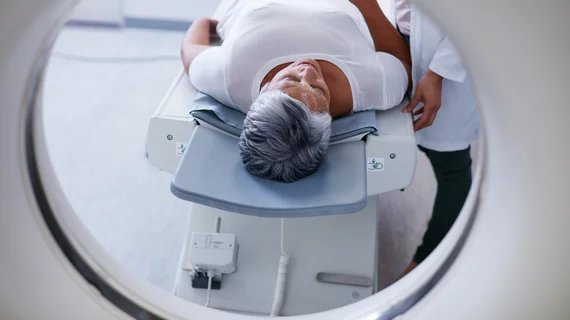
Tauklarify, also known as MK-6240, is a radiodiagnostic agent indicated for PET (positron emission tomography) imaging of adults. Ideal candidates have cognitive impairment, with physicians evaluating them for abnormal buildup of tau—twisted, insoluble protein fibers in brain cells—a potential sign of the neurodegenerative disease.
Bedford, Massachusetts-based Lantheus—which recently reached a deal to be sold to rival Curius for $8 billion—said the drug’s safety was tested in two clinical trials. Across over 1,700 subjects, researchers reported strong results, with only about less than 1% of subjects experiencing adverse reactions.
“Today’s approval of Tauklarify reflects both the increasing importance of tau imaging in Alzheimer’s disease assessment and the innovative development program that supported this milestone,” Mary Anne Heino, CEO and executive chair of Lantheus, said in a statement. “We remain committed to advancing research that will further define the role of tau imaging in understanding Alzheimer’s disease,” she added later.
Tauklarify carries some limitations, with its safety and effectiveness not established for evaluating other brain diseases. The FDA approval was supported by two blind-read studies, analyzing PET images from over 500 subjects who participated in three clinical trials. Participants included patients with mild cognitive impairment, mild Alzheimer’s disease dementia and cognitively unimpaired comparison subjects. This enabled physicians to evaluate across a broad spectrum of cognitive function, Lantheus noted, including early-stage disease.
All received an intravenous dose of Tauklarify of about 185 MBq (5 mCi) prior to tau PET imaging. In both studies, scans were interpreted by independent readers who underwent training on image interpretation and were blinded to subjects’ clinical info and amyloid beta PET results. Docs classified scans as positive or negative for tau neurofibrillary tangle pathology and compared them against a preestablished reference standard based on cognitive status and amyloid beta PET findings.
In the first study, involving 279 subjects, positive percent agreement—or how often a new diagnostic test matches a reference method—was between 80% to 88%. Negative percent agreement—how frequently a test matches the comparison at correctly giving a negative result—ranged from 98% to 99% across interpreters. Interreader agreement also was high across participating physicians. In the second study involving 338 subjects, positive percent agreement ranged from 68% to 82%, negative agreement from 93% to 99%, and interreader agreement remained high. The most common side effects included headache (0.7%), nausea (0.2%), injection site reactions (0.1%), dizziness (0.1%) and abdominal discomfort (0.1%).
“For clinicians and researchers, tau PET imaging is an important tool for identifying tau pathology in the brain and advancing our understanding of Alzheimer’s disease,” Keith Johnson, MD, a professor of neurology and radiology at Massachusetts General Hospital, Boston, said in the same statement. “The use of sensitive quantitative tau PET imaging is essential for increasing our understanding of potential disease impacts and moving novel treatments forward.”
Lantheus was not clear about Tauklarify’s immediate availability. The company said it plans to continue “supporting Alzheimer’s disease therapeutic programs” through its Pharma Solutions business while “assessing the appropriate path toward broader commercial availability.” The company emphasized its approach will “remain aligned with the needs of its partners and informed by developments across the Alzheimer’s disease treatment landscape.”
Tauklarify was previously advanced by Enigma Biomedical USA, with the company selling its subsidiary, Cerveau Technologies, to Lantheus in 2023 to complete the drug’s development. EB also touted the PET agent’s approval.
Over 7 million people in the U.S. currently have Alzheimer’s, with the number of individuals age 65 and older with the disease expected to exceed 13 million by 2050, Lantheus estimated. The tau-imaging market is currently dominated by Eli Lilly’s Tauvid, which gained approval in 2020 and is worth less than $100 million annually, Reuters reports. Annual sales of Tauklarify are forecasted at less than $50 million by 2030, B. Riley Securities analyst Yuan Zhi told the news outlet.

Marty Stempniak has covered healthcare since 2012, with his byline appearing in the American Hospital Association's member magazine, Modern Healthcare and McKnight's. Prior to that, he wrote about village government and local business for his hometown newspaper in Oak Park, Illinois. He won a Peter Lisagor and Gold EXCEL awards in 2017 for his coverage of the opioid epidemic.