
Low-value X-ray imaging for facial trauma still prevalent, despite CT’s superiority
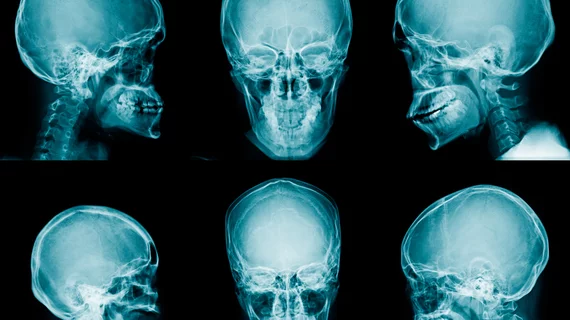
The use of low-value X-ray imaging of the face remains prevalent in the U.S., despite CT’s diagnostic superiority, according to new research published Tuesday.
Facial trauma is one of the most common reasons for emergency department visits, with such incidents increasing in frequency over time, experts note. Though computed tomography is the gold standard for evaluating maxillofacial fractures—given its advantages in sensitivity and specificity—clinicians continue to order plain radiographs of the face, nose and orbits.
Researchers with Michigan Medicine recently aimed to examine whether institutions are beginning to adhere to these American College of Radiology-recommended ordering habits. They found that unnecessary face imaging has gradually declined over time, though it’s still commonplace, according to an analysis published in JAMA Network Open.
This potentially presents “opportunities to improve adherence to evidence-based imaging practices.”
“Targeted interventions to reduce low-value imaging may improve diagnostic accuracy, reduce unnecessary costs and advance value-based care,” Gordon C. Wong, MBBS, a research fellow in the Section of Plastic Surgery at Michigan, and co-authors wrote Feb. 17.
Researchers gathered their information from Merative’s large-scale commercial claims database, with their study sample spanning 2013 to 2022. Altogether, the analysis included more than 281,000 patients who experienced maxillofacial trauma requiring treatment. Of those, about 26% received low-value plain radiography as their initial imaging, despite ACR and American Society of Plastic Surgeons guidelines favoring CT. Nearly 6% later received follow-up CT within a week, and almost 8% experienced a delayed fracture diagnosis.
In a positive sign, plain radiography use declined from about 33% of cases in 2013 down to 18% by 2022. Female patients, those seen in urgent care clinics and by family practitioners were more likely to receive such X-rays. In contrast, being seen by a surgical specialist or in an emergency department were both associated with significantly lower odds of receiving low-value imaging. Though median costs were lower for X-ray than CT ($56 vs. $378), radiographs represented a greater proportion of total (26% vs. 21%) and out-of-pocket costs (22% vs. 15%) in low-acuity settings, the authors noted.
In a corresponding editorial, experts speculated that the persistent utilization of low-value imaging represents more than just a lack of awareness about clinical guidelines. It also may stem from difficulty executing best practices in regular workflows. X-ray use was clustered in outpatient offices and urgent care centers and was most frequently associated with family medicine clinicians. Meanwhile, CT dominated in EDs.
“This may be because urgent care and office practices often operate with constraints that emergency departments do not: limited on-site advanced imaging, variable after-hours radiology availability, and payer prior-authorization requirements that delay and therefore deter CT ordering,” wrote Chao Long Azad, MD, MPH, and Aviram M. Giladi, MD, MS, with MedStar Union Memorial Hospital, Baltimore. “In these settings, radiographs may seem like a pragmatic compromise allowing for quick assessment and development of a plan. Future studies that elucidate how often or likely infrequently these low-value radiographs change the care plan may further clarify the appropriateness of adhering to recommendations of using CT when imaging is indicated,” they added.
Read more, including potential study limitations, in JAMA.

Marty Stempniak has covered healthcare since 2012, with his byline appearing in the American Hospital Association's member magazine, Modern Healthcare and McKnight's. Prior to that, he wrote about village government and local business for his hometown newspaper in Oak Park, Illinois. He won a Peter Lisagor and Gold EXCEL awards in 2017 for his coverage of the opioid epidemic.