
Virtual interview etiquette: What radiology residency program leaders expect from candidates
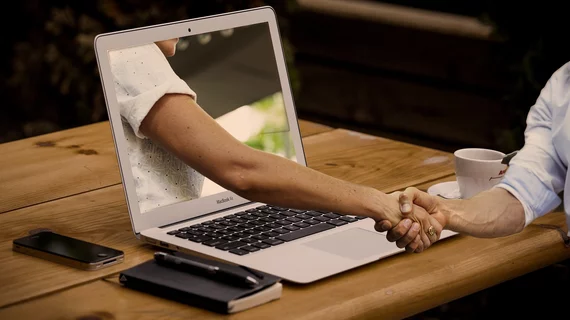
While virtual residency interviews offer convenience for both applicants and program directors, they should be approached with the same effort and etiquette as in-person meetings. A new paper suggests that some applicants might be a little too comfortable with the virtual setup.
Virtual radiology residency interviews became a lifeline during the COVID-19 pandemic, and many programs have continued to offer the option to applicants in the years since. After years of conducting interviews remotely, a group of experts recently sought to gauge program directors’ perceptions of how applicants have presented themselves when given the opportunity to interview virtually.
They published their findings March 12 in Academic Radiology.
“The landscape of graduate medical education recruitment underwent an unprecedented transformation during the COVID-19 pandemic, with virtual interviews becoming the predominant method for residency selection across medical specialties,” Joshua D. Brown, MD, PhD, with the department of radiology at Emory University School of Medicine, Atlanta, and colleagues noted. “However, the transition to virtual platforms has also introduced unique challenges that require careful consideration of professional etiquette and conduct. Program directors across specialties have expressed concerns about their ability to assess applicant professionalism, interpersonal skills, and program fit through virtual interactions.”
The team distributed surveys to radiology residency programs throughout the U.S. in the fall of 2024. These included 17 questions covering five primary domains: 1) demographic and professional characteristics, 2) visual background preferences, 3) technical quality standards and impact assessment, (4) professional attire and appearance, and 5) behavioral etiquette and interview conduct preferences. Complete responses were received from 56 programs.
Here are some of their takeaways:
Backgrounds: Respondents expressed preference for tidied backgrounds or backdrops that were blurred or blank; opinions on photographs were mixed. Some shared that, in free-text responses, they preferred not to see candidates’ beds in the background, suggesting they may have experienced this at some point.
Behavior: Respondents highlighted the ability to maintain eye contact as a positive attribute, while eating during interviews was generally frowned upon. Candidates who read from scripts during their interview were viewed less favorably, though looking away to take notes was well received and appreciated.
Attire: Around 36% of respondents expressed preference for wearing ties during interviews, while 25% strongly agreed they are necessary and 27% were neutral. The general consensus was that candidates should dress the same way they would have if they were interviewing in person.
Technical standards: Horizontal video formats were preferred by the majority of respondents. The same amount also preferred that candidates’ microphones remained on throughout the duration of the interview.
Environment/Setup: The majority of respondents preferred candidates to not have other people and/or pets in the background. Distinct decor was more accepted, with many viewing it as acceptable or having neutral opinions.
Not surprisingly, connection interruptions and audio problems were mentioned by most respondents as significant pain points in virtual interviews. Technical preparation is something that candidates need to be proactive about, the group suggested, to ensure interviews are not disrupted.
“Virtual interview etiquette represents an essential component of professional residency recruitment. Establishing clear expectations for both applicants and programs should enhance the virtual interview experience,” the group noted. “The findings demonstrate that while program directors have adapted to virtual interview formats, they maintain high expectations for professional standards that mirror traditional in-person interview requirements.”
For more of the group’s advice on preparing for virtual interviews, click here.

In addition to her background in journalism, Hannah also has patient-facing experience in clinical settings, having spent more than 12 years working as a registered rad tech. She began covering the medical imaging industry for Innovate Healthcare in 2021.