
AI reduces readers' kidney lesion interpretation times by over 30%
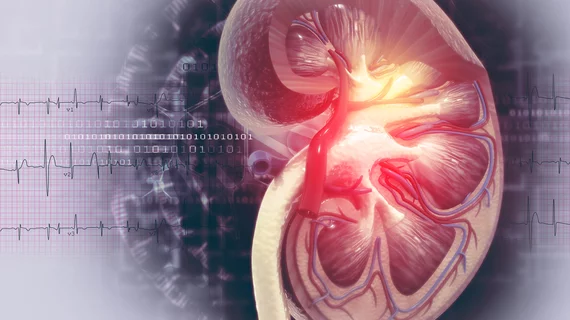
A clinically validated opportunistic artificial intelligence tool could help readers differentiate between benign and malignant kidney lesions 30% faster.
Amid the growing demand for CT imaging and ongoing staffing woes in radiology, experts recently sought to develop a tool that could help radiologists to more quickly identify suspicious lesions on scans. BMVision—a deep learning-based software for detecting and characterizing kidney cancer—helps readers achieve this, enabling them to halve their interpretation times in some cases, according to a recent paper published in Nature Communications Medicine.
What’s more, the tool also can be used on contrasted abdominal scans completed for other clinical indications, offering physicians an opportunity to address suspicious lesions before they progress.
“Kidney cancer is one of the most common cancers of the urinary system...However, there are not enough radiologists, and the demand for scans is growing,” Dmytro Fishman, an associate professor in artificial intelligence at the Institute of Computer Science, Tartu University, Estonia, and colleagues noted. “This makes it more challenging to provide patients with fast and accurate results.”
The tool was recently tested by a group of six radiologists tasked with interpreting 200 CT scans. Readers reported on the scans twice—once without the help of AI and once with the tool, which also conducts measurements and provides risk scores for the lesions. Accuracy, reporting times and inter-radiologist agreement were each compared for both sets of reads.
AI assistance significantly improved reporting times. Radiologists reduced their reading times by an average of 33%, with some cutting their time by as much as 52%. This was due, in part, to the auto-generated reports that reduce the need for typing and manual dictation. Use of AI also improved sensitivity by a little over 6%, which increased inter-reader agreement as well.
“This study adds to the growing body of evidence that modern AI tools developed in research labs can make a real impact in clinical practice and support doctors in their daily work,” the authors wrote. “We are very encouraged by these results, which show that AI research in medicine is not only meaningful, but it can truly be used for good.”
Read more about their work here.

In addition to her background in journalism, Hannah also has patient-facing experience in clinical settings, having spent more than 12 years working as a registered rad tech. She began covering the medical imaging industry for Innovate Healthcare in 2021.