
Study links CT reporting slowdowns to longer emergency department stays
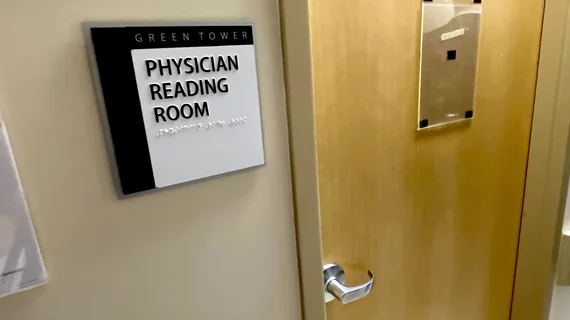
New data link delays in CT reporting to prolonged hospital stays for patients being seen in trauma settings.
Published in Clinical Radiology, the findings suggest that radiology reporting workflows may represent an opportunity to improve patient flow in emergency departments. This could be particularly relevant in settings where imaging resources and specialist availability may be constrained.
Faster access to preliminary interpretations could help clinicians make earlier decisions about patient disposition and subsequent treatment.
“Computed tomography is integral to trauma assessment, enabling rapid detection and severity assessment of injuries. Its use has also been associated with a reduction in ICU admissions, shorter hospital stays and fewer surgical interventions,” Dr. Ryan Sherry, with the University of the Witwatersrand in Johannesburg, South Africa, and colleagues noted. “Nonetheless, CT imaging introduces potential delays that may prolong ED [lengths of stay]. CT turnaround time—from scan request to report completion—and, more specifically, CT report turnaround time—from scan completion to report generation—are useful metrics for assessing radiology workflow efficiency.”
The study included 1,246 adult trauma patients admitted between January and March 2022. Of those, 729 (59%) underwent CT imaging. Researchers examined three imaging workflow intervals: CT time, preliminary report turnaround time and final report turnaround time.
Overall, the average emergency department length of stay was 8.9 hours, but patients who underwent CT remained in the department significantly longer than those who did not, with mean stays of almost 11 hours and 6 hours, respectively. Among patients undergoing CT, median CT time was 5 hours, while median preliminary report turnaround time was 2 hours; median final report turnaround time was substantially longer, at more than 11 hours.
In a secondary analysis adjusted for age, sex, shock index, Glasgow Coma Scale score and CT time, only preliminary report turnaround time remained independently associated with ED lengths of stay. Each additional hour in preliminary reporting time corresponded to a more than half-hour increase in emergency department stay.
However, the group acknowledged that the retrospective design of the study did not allow them to establish that reporting delays directly caused longer emergency department stays. Despite this, the authors still indicated that improving CT reporting efficiency could be one potential way to reduce prolonged emergency department stays among trauma patients.
Read more here.

In addition to her background in journalism, Hannah also has patient-facing experience in clinical settings, having spent more than 12 years working as a registered rad tech. She began covering the medical imaging industry for Innovate Healthcare in 2021.