Diagnostic screening programs help catch cancer, abnormalities or other diseases before they reach an advanced stage, saving lives and healthcare costs. Screening programs include, lung, breast, prostate, and cervical cancer, among many others.
The law reflects growing interest in using existing imaging studies to identify cardiovascular disease risk without requiring additional scans, radiation exposure or costs.
New research could provide useful information for cancer registries and potentially help policymakers better evaluate screening outcomes to develop more effective guidelines.
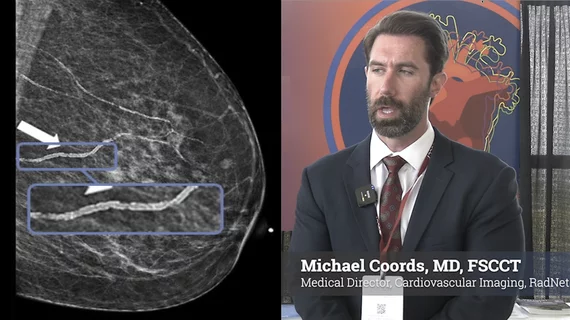
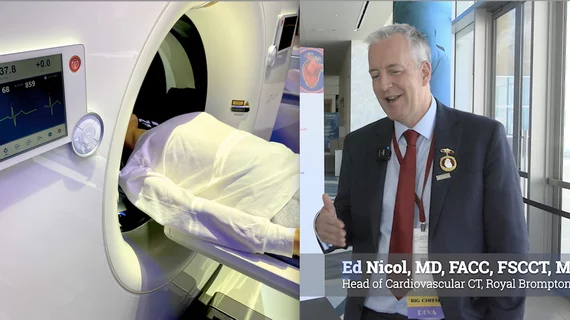
Former SCCT president Ed Nicol, MD, knows there has been interest in the potential of automated CT exams. However, he isn't so sure they are possible at this point in time for a number of reasons.
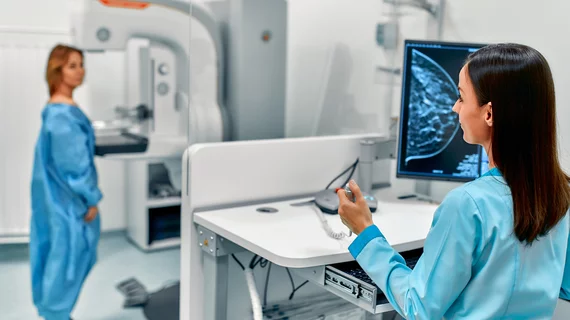
Countless studies have shown 3D mammography can reduce false positives and increases cancer detection in women with dense breasts, it creates a better overall patient experience, and insurance companies are finally beginning to cover costs associated with 3D mammograms.
Researchers and clinicians from Cooper University Hospital have been using spectral mammography on a daily basis since November 2012. A group of residents, fellows and faculty from Cooper published a review of techniques and practical applications of contrast-enhanced spectral mammography (CESM) in Academic Radiology.
An imaging-based study published online Oct. 24 in Radiology may reach millions via network news and make an impact on youth football leagues across the country.
The American College of Radiology (ACR) has tapped Benjamin Strong, MD, chief medical officer of the teleradiology practice vRad, to serve on an emergency-radiology committee and to share his emergency expertise in an ongoing educational program.
A few days ago a physician who is not a radiologist took to the online pages of Physician’s Money Digest to give five reasons why radiologists are indeed “real doctors.” (HealthImaging picked it up.) It didn’t take long for a physician—a radiology resident, no less—to come back with a counterargument.
A new article by Dataconomy, a data technology news site, discusses how an app could help people avoid the health risks associated with radiation exposure when undergoing imaging tests.
While it’s not a part of established diagnostic criteria, the use of MRI in the emergency department to evaluate multiple sclerosis (MS) patients for possible exacerbations pays good diagnostic and care-management dividends, according to study conducted at Johns Hopkins and published online Oct. 6 in the American Journal of Neuroradiology.
It’s the maddening malady you’ve never heard of unless you hear it inside your head every day and nobody else can hear it yet it’s so loud to you that you can actually record it. Seriously.