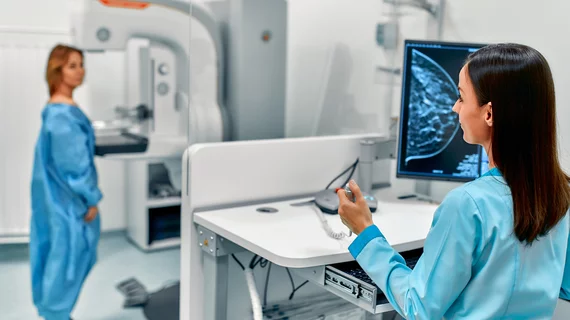
Diagnostic screening programs help catch cancer, abnormalities or other diseases before they reach an advanced stage, saving lives and healthcare costs. Screening programs include, lung, breast, prostate, and cervical cancer, among many others.
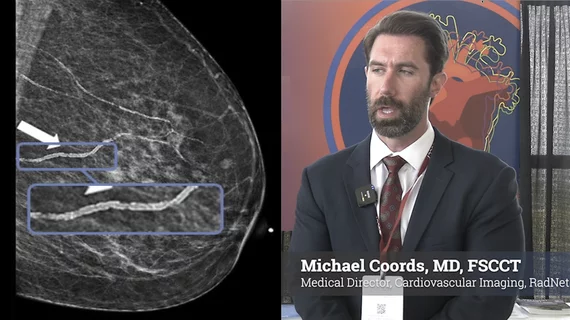
The law reflects growing interest in using existing imaging studies to identify cardiovascular disease risk without requiring additional scans, radiation exposure or costs.
New research could provide useful information for cancer registries and potentially help policymakers better evaluate screening outcomes to develop more effective guidelines.
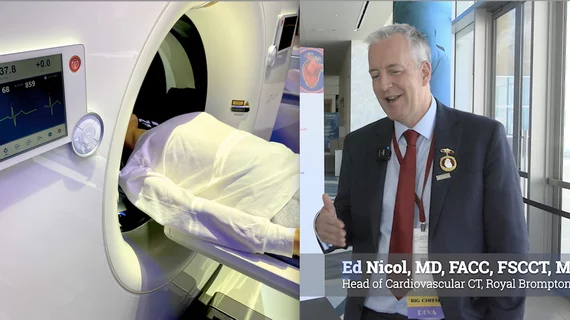
Former SCCT president Ed Nicol, MD, knows there has been interest in the potential of automated CT exams. However, he isn't so sure they are possible at this point in time for a number of reasons.
Functional MRI may help settle an open question among pediatric neurologists over “second impact syndrome” in child and teen football players.
New research published in the journal Scientific Reports shows a new way to detect the return of ovarian cancer earlier than previously possible.
Noting that endometrial cancer (EC) is the most common cancer of the female reproductive organs, an expert panel reports that it has developed and refined ACR appropriateness criteria on the management of patients with recurrent EC across its most common clinical variants.
Screening children for scoliosis has risen and fallen in popularity over the years, with appropriate utilization of X-rays at the heart of the debate underlying the inconsistency.
Computers might be able to detect early signs of Alzheimer’s that their human operators aren’t even aware exist, according to a new study in Radiology.
A story from GeekWire.com looks at a research team, with help from a grant from the National Space Biomedical Research Institute (a NASA-funded group), that is developing a handheld ultrasound device that can detect and pulverize kidney stones—without surgery or bulky equipment.
Elizabeth Yale, PhD, an assistant professor at the University of Iowa, wrote an essay exploring prenatal imaging practices before ultrasound that focuses on two centuries old practices that show how much different things were in the past.