
Interventional radiologist helps Chicago children’s hospital achieve a world’s first
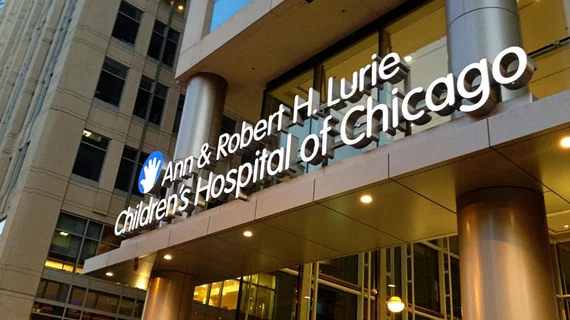
An interventional radiologist has helped a Chicago pediatric provider achieve what it says is a world first.
Physicians at Lurie Children’s Hospital said they achieved a medical breakthrough by eliminating months of pain after surgical repair for microtia. The rare condition leaves children born with an underdeveloped or missing outer ear, with surgical treatment producing prolonged postoperative pain.
That’s because physicians must harvest cartilage for ear reconstruction from one of the patient’s ribs. However, Lurie Children’s specialists have championed a new approach that involves freezing the nerve at the rib harvesting site through a minimally invasive, ultrasound-guided procedure that lasts “only 20 minutes.”
Such “intercostal nerve cryoablation” allows patients to go home without pain as early as one day after surgery. Early experience with this “groundbreaking approach” was reported in the journal of Plastic and Reconstructive Surgery, with over 30 patients now benefiting from this method of controlling pain, reducing opioid use and shortening hospital stays.

“Our innovation removes the pain obstacle from natural ear reconstruction,” study co-author Shankar Rajeswaran, MD, division head of interventional radiology at Lurie Children’s and an associate professor of radiology at Northwestern University, said in a statement May 27. “It is a paradigm shift in how we approach pain management in microtia patients.”
Rajeswaran estimated that the rib harvesting regenerates within six months, without causing additional pain or adverse effects. In a LinkedIn post Wednesday, he said the procedure was among “the most impressive displays of surgical artistry I have ever witnessed.” Typically, postop pain can result in prolonged hospital stays, causing “major concern for families.” He said Lurie Children’s interventional radiologists and plastic surgeons are seeking to change that narrative.
“By freezing the nerves in the OR through pinhole incisions, we drastically alter the recovery process,” he wrote on LinkedIn. “It is easily one of the coolest things I've been a part of since joining Lurie,” he added later.
In another ongoing study, Dr. Rajeswaran and plastic surgeon colleague Akira Yamada, MD, PhD, are comparing outcomes of microtia repair with the nerve freezing procedure and without. They’ll also evaluate opioid use, hospital lengths of stay and functional recovery, with their research expected to be completed by the end of 2026. Experts estimate microtia affects up to 4 in 10,000 babies globally, with symptoms including missing tissue, an underdeveloped ear canal or possible hearing loss.

Marty Stempniak has covered healthcare since 2012, with his byline appearing in the American Hospital Association's member magazine, Modern Healthcare and McKnight's. Prior to that, he wrote about village government and local business for his hometown newspaper in Oak Park, Illinois. He won a Peter Lisagor and Gold EXCEL awards in 2017 for his coverage of the opioid epidemic.