
Interventional radiology procedure offers relief from painful blood-clot side effect
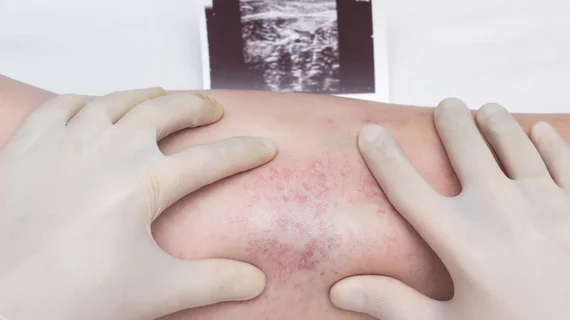
New trial findings might offer hope for patients who struggle with post-thrombotic syndrome following deep vein thrombosis.
The syndrome is the result of permanent damage to the veins inflicted by these blood clots in the legs. The condition causes swelling, discoloration and pain in the lower extremities and can feel debilitating for many. Treatment options often are limited, and many patients continue to endure pain afterward.
Findings from new study—Chronic Venous Thrombosis: Relief with Adjunctive Catheter-Directed Therapy, or C-TRACT—could offer hope to patients struggling with post-thrombotic syndrome. C-TRACT, which was sponsored by National Institutes of Health, compared the effectiveness of stent placement in blocked veins to the standard of care, which involves blood-thinning medications and compression stockings. The study yielded promising results, suggesting that the interventional procedure could help improve the quality of life for patients with this condition.
C-TRACT involved 225 subjects with moderate to severe post-thrombotic syndrome. Patients were treated by a multispecialty group of providers working at 1 of 29 participating institutions, though interventional radiologists conducted most procedures. The stents were placed in problematic veins to help drain blood and were used in conjunction with the standard of care.
Using the Venous Clinical Severity Score for each patient, researchers compared the impact of both treatment methods. Through this, they observed significantly more pronounced improvements in post-thrombotic syndrome severity in the group who received stents; six months post-procedure, just 40% of patients in the stent group had symptoms that could still be classified as severe.
“Many patients with [post-thrombotic syndrome] suffer in silence because few physicians are aware of this complication or know how to effectively treat it,” principal investigator Suresh Vedantham, MD, an interventional radiologist at WashU Medicine's Mallinckrodt Institute of Radiology, St. Louis, Missouri, said in a news release on the findings.
The study’s findings can be found in the New England Journal of Medicine.

In addition to her background in journalism, Hannah also has patient-facing experience in clinical settings, having spent more than 12 years working as a registered rad tech. She began covering the medical imaging industry for Innovate Healthcare in 2021.