
Ultrasound guidance safer, more effective for biopsies of peripheral lung lesions in pediatric patients
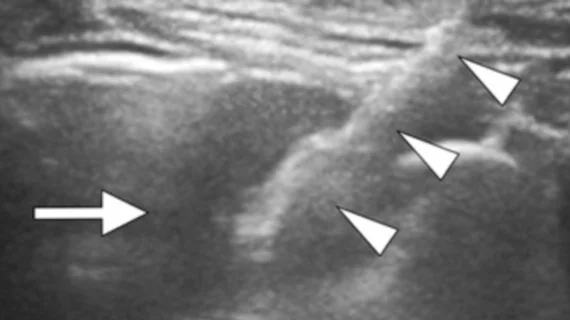
Ultrasound guidance may be more beneficial in guiding percutaneous lung biopsy in pediatric peripheral lung lesions compared to the standard of care.
It can be difficult to determine the risks associated with pediatric lung lesions due to their heterogeneity. Imaging alone often does not yield the diagnostic information sought, leading to the need for biopsy.
But often biopsies carry increased risk of serious complications, and transbronchial biopsies are not recommended for peripheral lung lesions. Percutaneous biopsy is indicated for these lesions in the pediatric population. CT guidance is typically used to help guide providers during the procedure, but the modality comes with caveats, the authors of a new analysis in the Journal of Vascular and Interventional Radiology note.
“CT-guided transthoracic needle biopsy (CT-PTNB), while effective in adults, exposes children to ionizing radiation (3–5 mSv per procedure) and carries complication rates of 24%–39%, including pneumothorax and hemorrhage,” Wenyuan Shi, MD, with the Department of Interventional Medicine at the National Center for Children's Health in Beijing, and colleagues explain. “These challenges are heightened in immunocompromised children (e.g., post-chemotherapy/bone marrow transplantation), who poorly tolerate invasive biopsies but frequently require rapid diagnosis of solid lesions to guide life-saving therapies.”
Ultrasound guidance has been presented as a viable alternative for image guidance. The technique has proven effective in adults, but there is a lack of data on its use in the pediatric population. This led the team to conduct their own internal assessment of outcomes related to ultrasound-guided percutaneous lung biopsy (US-PLB) in children with peripheral lung lesions.
There was a total of 33 patients’ cases included in the study. US-PLB yielded an accuracy of 97%, a sensitivity of 80% and a specificity of 100%. Slightly under 18% of the procedures resulted in minor complications, including pneumothorax (2.9%) and transient hemoptysis (2.9%). However, these rates are less than those observed with the use of CT guidance, which can range from 24%–39%.
Ultrasound guidance led to alternative treatment decisions in nearly half of the cases (44%). This enabled providers to initiate more effective treatment strategies.
“Notable therapeutic modifications encompassed targeted oncologic interventions for four confirmed malignancies, pathogen-directed antimicrobial regimens in eight infectious cases, and immunomodulatory adjustments (e.g., steroid, immunosuppressant optimization) for patients with vasculitis or interstitial pneumonia,” the authors note. “This precision medicine approach reduced unnecessary therapies, exemplified by one patient avoiding futile chemotherapy, while concurrently alleviating familial distress and lowering healthcare expenditures through avoidance of prolonged, ineffective treatments.”
The team’s findings on the safety and efficacy of ultrasound guidance prompted the group to suggest that US-PLB could serve as a preferred radiation-free option for peripheral lung lesions.
Learn more about the study here.

In addition to her background in journalism, Hannah also has patient-facing experience in clinical settings, having spent more than 12 years working as a registered rad tech. She began covering the medical imaging industry for Innovate Healthcare in 2021.