
New guidance on when to use MRI for pediatric patients experiencing seizures
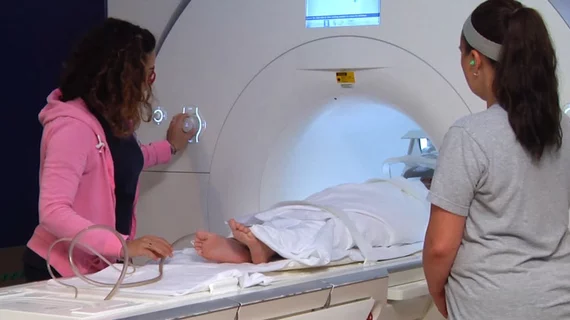
New data could help guide providers on the appropriate use of MR imaging for pediatric patients presenting to emergency departments with seizures for the first time.
Determining the source of an unprovoked seizure in young patients who have no prior history can be challenging, and guidelines for doing so are somewhat conflicting. The use of MRI in this cohort is debated among medical experts, the authors of a new paper in the American Journal of Emergency Medicine contend.
“Despite evolving guidelines, questions remain regarding which patients are most likely to benefit from this diagnostic procedure, especially when resources are constrained. Historically, many clinicians relied on computed tomography scans or delayed outpatient MRIs,” Jun Sung Park, MD, with the department of pediatrics at Asan Medical Center, in the Republic of Korea, and colleagues note. “More recently, emerging evidence suggests that early brain MRI can significantly increase the diagnostic yield for identifying structural lesions”
The team sought to determine whether specific patient factors would lead to emergent neuroimaging findings. To do this, researchers gathered data from all the pediatric patients who presented to a single institution's pediatric ED with new-onset, unprovoked seizures between January 2010 and December 2023.
In total, there were 222 children included in the study, all of whom underwent MR imaging while in the ED. Of those, 84 (37.8 %) had an epileptogenic lesion on their imaging, while 18 (21.4 %) had findings considered emergent. Patients who presented with multiple seizures, prolonged seizures lasting five minutes or more and those with developmental delays were significantly more likely to have epileptogenic lesions.
Classifying patients with at least one of these risk factors as high risk, and therefore in need of timely imaging, yielded a sensitivity of 94% and specificity of 55.1 % for detecting epileptogenic lesions, and a sensitivity of 100% and specificity of 39.7 % for emergent findings. Just 5 of the 81 patients who did not have any of the aforementioned risk factors had epileptogenic lesions on imaging, but none had emergent findings.
These results have significant clinical implications, the group suggests.
“The high sensitivity ensures that clinicians using this system would rarely miss patients with significant pathology requiring intervention—a critical consideration in emergency settings where delayed diagnosis could lead to adverse outcomes,” the authors explain. “The relatively lower specificity reflects our intentional emphasis on minimizing false negatives. While this approach results in some over-triage (approximately 45% of patients without epileptogenic lesions would undergo potentially unnecessary MRI), we consider this an acceptable trade-off given the potential consequences of missed diagnoses, especially in pediatric patients.”
The authors note that their classification system would be particularly beneficial in resource-strapped settings.
Learn more about the team’s findings here.

In addition to her background in journalism, Hannah also has patient-facing experience in clinical settings, having spent more than 12 years working as a registered rad tech. She began covering the medical imaging industry for Innovate Healthcare in 2021.