
Vigilance needed to ensure safety in pediatric MR imaging, experts warn
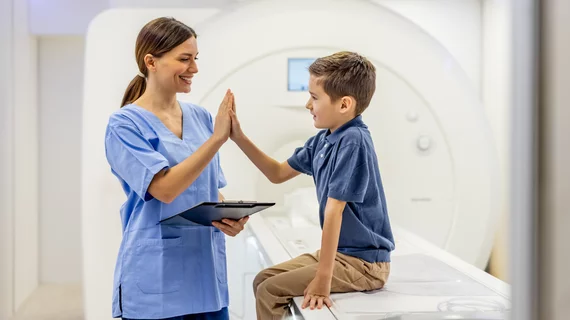
Vigilance is needed to ensure patient safety in pediatric MR imaging, experts warn in new research published Friday by JACR.
Safety events remain relatively common in pediatric imaging, though most do not result in significant patient harm. However, these occurrences have the potential for serious consequences for patients, their parents or guardians, and MRI staff.
The conclusions are based on an analysis of safety data from five leading pediatric hospitals, spanning 2017 to 2022. Over the course of five years, there were about 146 pediatric MRI safety incidents that occurred, out of nearly 541,000 scans conducted.
“Although uncommon, MRI safety incidents do occur in Zone IV of pediatric imaging departments,” corresponding author Jonathan R. Dillman MD, MSc, with the Department of Radiology at Cincinnati Children’s Hospital, and colleagues concluded. “While most cause no serious harm, their persistence and potential for catastrophic outcomes highlight the need for continued vigilance and ongoing safety improvements.”
Zone 4 refers to the MRI scanner room, which presents the greatest risk of harm for both patients and staffers. Such zones are part of the American College of Radiology’s safety model aimed at improving imaging care. Possible incidents occurring in Zone 4 could include projectile accidents involving items such as oxygen tanks or jewelry getting pulled into the magnet with dangerous force. Unauthorized access to Zone 4 also can result in serious injuries, with the death of Keith McAllister, 61, one recent example. (The Long Island man entered the scanner room to help his wife while he was wearing a heavy metal necklace.)
Pediatric hospitals participating in the study included Seattle Children’s, Lucile Packard Children’s Hospital (affiliated with Stanford University), Children’s Healthcare of Atlanta, Texas Children’s Hospital, and Cincinnati Children’s. On average, each site experienced about 5 MRI safety events in Zone 4 per year or about 3 per 10,000 exams. Of the 146 events, 30% (or 44) involved projectiles, 13% (19) were burn/thermal injuries, and 10% (14) were implant related. Ten of the events (or 7%) were classified as serious safety occurrences. MRI safety protocols were not correctly followed in 88 of the 146 events (or 60%), and 78/146 (or 53%) directly involved patients.
Medical equipment and supplies, along with personal items (e.g., phones, pens, badges), were among the most common contributors to safety events. The latter, the authors noted, underscores the need for improved patient and staff screening procedures for these items prior to entering Zone 4. Though implant-related events were less common, such incidents can happen “even when manufacturer guidelines are followed.” The authors estimated that between 20% to 30% of children undergoing MRIs may have such implants, which can include glucose monitors, surgical K-wires or aneurysm clips.
“As a result, implants represent a growing challenge for MRI safety that requires coordination among radiologists, technologists, scanner manufacturers, device manufacturers and the U.S. FDA,” the authors wrote, noting that one institution in the study had six events related to hearing implants. “Such cases also highlight the importance of incident reporting to both manufacturers and relevant government agencies, which can drive improvements in device design and MRI compatibility,” the authors added later. “Consistent use of device checklists during the MRI safety screening process and imaging encounter is essential to ensure all implants are identified, verified for MRI safety, and safely imaged.”
Read more, including potential study limitations, in the Journal of the American College of Radiology.

Marty Stempniak has covered healthcare since 2012, with his byline appearing in the American Hospital Association's member magazine, Modern Healthcare and McKnight's. Prior to that, he wrote about village government and local business for his hometown newspaper in Oak Park, Illinois. He won a Peter Lisagor and Gold EXCEL awards in 2017 for his coverage of the opioid epidemic.