
Eden Radioisotopes advances plans for $1.4B medical isotope facility in New Mexico
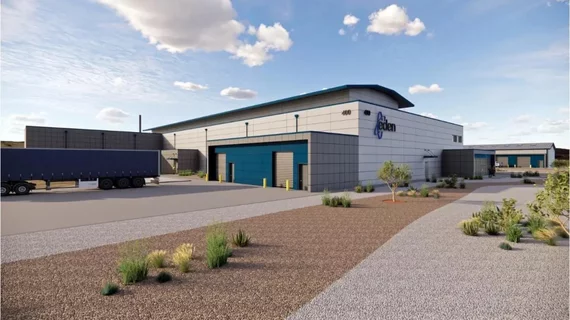
Eden Radioisotopes is making important strides in its plans to build a $1.4 billion medical isotope production facility in New Mexico.
The Albuquerque-based company believes the project could strengthen the U.S. supply of isotopes used in diagnostic imaging and targeted cancer treatments. The company announced this week that the state of New Mexico will support the planned investment through several economic development programs.
The Lea County facility is planned to be North America's first purpose-built medical isotope production reactor and processing facility. Eden expects the project to create 205 jobs and generate more than $1.5 billion in economic impact over 10 years.
The project is intended to address vulnerabilities in the U.S. medical isotope supply chain. More than 40,000 medical procedures performed each day in the U.S. rely on medical isotopes, while much of the nation's supply depends on aging domestic and foreign reactors. Because many medical isotopes have relatively short half-lives and cannot be stockpiled for extended periods, disruptions in production or transportation can quickly affect the availability of diagnostic and therapeutic radiopharmaceuticals, as has been the case on multiple occasions in recent years.
If completed as planned, the facility could add significant domestic production capacity at a time when demand for radiopharmaceuticals is increasing. Reliable access to medical isotopes is particularly important for nuclear medicine, where short-lived radioactive materials must be produced and delivered on tight timelines.
“This is about turning an ambitious idea into critical American infrastructure,” Carrie Freeman, CEO of Eden Radioisotopes, said in an announcement. “The State of New Mexico understands both the economic opportunity and the national importance of what we are building.”
The project also builds on New Mexico's longstanding role in nuclear research. Eden's reactor technology is based on research developed at Sandia National Laboratories, while the state's universities and technical workforce are expected to support development of the facility and its workforce.
Eden filed a construction permit application with the U.S. Nuclear Regulatory Commission in May. The company anticipates a formal NRC decision in mid-2027 and expects the facility to begin commercial operations in 2030. Once construction is approved and completed, the facility could produce up to 50% of the global demand for Mo-99—a critical medical radioisotope.

In addition to her background in journalism, Hannah also has patient-facing experience in clinical settings, having spent more than 12 years working as a registered rad tech. She began covering the medical imaging industry for Innovate Healthcare in 2021.