
Largest network of private cardiology groups in US to deploy GE HealthCare's cardiac PET tracer
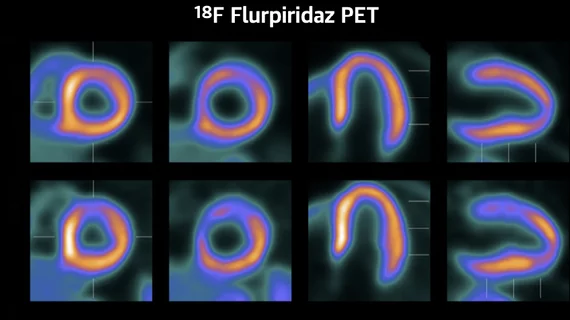
Use of GE HealthCare’s cardiac PET radiotracer Flyrcado (flurpiridaz F 18) is set to significantly expand throughout the United States.
The health tech giant on Monday announced that the Cardiovascular Associates of America (CVAUSA) intends to increase its utilization of the radiotracer across an additional 25 sites. The largest network of private cardiology groups in the U.S. is making the change following a successful pilot at Cardiovascular Medicine in Davenport, Iowa, where it was being deployed in real-world clinical settings.
That pilot was conducted over a period of two weeks; during that time, 21 patients were scanned using the radiotracer. According to Edmund Coyne, MD, former president of cardiovascular medicine, staff at the Davenport site were able to seamlessly integrate the use of Flycardo into their workflows without disruption.
“We saw firsthand the benefits in diagnostic confidence and efficiency, as well as excellent image quality, and we look forward to seeing these advantages scaled across CVAUSA’s network,” Coyne said in an announcement.
“Our mission is to deliver the highest quality cardiovascular care, and expanding the use of advanced cardiac PET imaging is a key part of that,” added Tim Attebery, chief executive officer of CVAUSA. “We perform approximately 85,000 cardiac PET procedures annually across our network, and following a successful pilot with Flyrcado, we’re excited to bring this technology to more of our sites—helping our partner cardiologists make more informed decisions for patients with known or suspected coronary artery disease.”
Flycardo was approved by the U.S. Food and Drug Administration in September 2024 for use in adults with known or suspected CAD to evaluate for indications of myocardial ischemia and/or infarction. One of the tracer’s more significant advantages is its extended half-life of 109 minutes—significantly longer than other currently available PET MPI imaging agents. The longer half-life allows for off-site manufacturing, which has the potential to expand access to PET MPI diagnostics. It also enables providers to conduct multiple cardiac examinations, including exercise stress testing, within the same timeframe, and patients can be rescanned during the same appointment if necessary.
CVAUSA’s expanded use of Flycardo is in line with the rising use of PET imaging in cardiac medicine. Unlike SPECT, PET can quantify blood flow and flow reserve across the heart muscle. This allows clinicians to detect both obstructive and non-obstructive coronary disease and identify microvascular dysfunction with greater precision.
Read more about the radiotracer and the latest developments in nuclear cardiology below:

In addition to her background in journalism, Hannah also has patient-facing experience in clinical settings, having spent more than 12 years working as a registered rad tech. She began covering the medical imaging industry for Innovate Healthcare in 2021.