
Imaging markers of brain frailty linked to functional outcomes in stroke patients
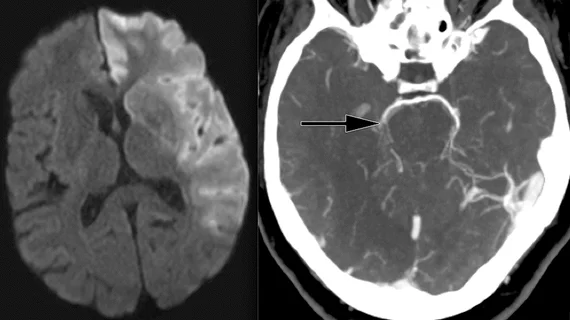
New data highlight imaging findings that may be associated with functional outcomes in patients with acute ischemic stroke.
Published in JAMA Network Open, the study indicates that the combination of imaging findings and a total brain frailty score could offer providers valuable insight into patients’ risks. Such baseline neuroimaging markers could provide clues into how patients will respond to treatment, thrombolysis in particular, experts involved in the analysis suggested.
“Understanding how neuroimaging markers of brain frailty influence outcomes following treatment with thrombolytic agents is crucial, as it may inform clinical decision-making and treatment expectations,” Spencer P. Loewen, PhD, with the Calgary Stroke Program in Alberta, Canada, and colleagues noted. “Therefore, we explored the association between the burden of brain frailty in neuroimaging and key efficacy and safety outcomes in patients following intravenous thrombolysis for [acute ischemic stroke].”
For their work, the team analyzed data from more than 1,500 patients who were diagnosed with acute ischemic stroke prior to being treated via thrombolysis with either alteplase (0.9 mg/kg) or tenecteplase (0.25 mg/kg). The patients presented and underwent noncontrast CT within four hours of symptoms onset. Providers examined the imaging for signs of brain frailty, including cortical and subcortical atrophy, white matter changes (Fazekas score, grouped as 0, 1-2, and 3-6), lacunes and chronic infarctions. For those who also had post-treatment MRI exams available, the team assessed the scans for microbleeds, siderosis and enlarged perivascular spaces. The findings were compared to patients’ functional outcomes 90 days post-treatment.
The group determined that higher total Fazekas scores ranging from 3 to 6 compared with 0 were associated with lower odds of a 90-day modified Rankin score (mRS score) of 0 to 1. In other words, higher Fazekas scores correlated with worse 90-day functional outcomes. Total Fazekas score, cortical atrophy and total brain frailty score were all found to be linked with worse ordinal mRS, though this finding was not associated with safety outcomes.
The authors suggested their findings could help guide providers in deciding how to best treat acute ischemic stroke patients.
“Given the feasibility and relevance of evaluating brain frailty on [noncontrast CT], our results suggest that brain frailty assessment on baseline NCCT may provide a more standardized measure of the underlying vulnerability that our field has hitherto sought to capture with premorbid disability measures such as the prestroke mRS, which was not designed for evaluation of prestroke functional assessment and has suboptimal validity,” the team noted. “Brain frailty may therefore more accurately determine poststroke recovery and provide an alternative method for patient selection or stratification for clinical trials.”
Read more here.

In addition to her background in journalism, Hannah also has patient-facing experience in clinical settings, having spent more than 12 years working as a registered rad tech. She began covering the medical imaging industry for Innovate Healthcare in 2021.