
Imaging offers insight into impact of new Alzheimer's treatment from Eli Lilly
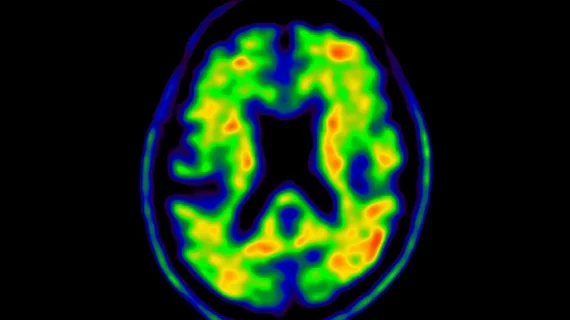
New imaging data provide evidence that an amyloid removal treatment for Alzheimer’s effectively slows cognitive decline.
Donanemab, marketed under the brand name Kisunla, is one of the more recent Alzheimer’s therapies to receive U.S. Food and Drug Administration’s approval, which was granted in July 2024. It is a monoclonal antibody medication capable of targeting and removing amyloid beta plaques believed to be associated with cognitive impairment.
In theory, reducing the presence of these plaques should improve cognitive function, and studies have indicated this is the case. However, offering objective evidence tis challenging. Though clinical data have suggested amyloid-targeting treatments are beneficial, the results have been mixed in some cases due to varying research methodologies.
“Inconsistent results have been observed when directly correlating post-treatment amyloid changes with clinical and biomarker assessments,” Ming Lu, MD, of Eli Lilly and Company, and co-authors explained in JAMA Neurology. “Aggregated assessment across amyloid-targeting therapy trials suggests that amyloid plaque reduction is correlated with clinical benefit.”
The group recently analyzed imaging data from the randomized, placebo-controlled, phase 3 TRAILBLAZER-ALZ 2 trial, offering an objective assessment of Kisunla's impact. They focused on over 1,500 patients with early symptomatic Alzheimer’s and amyloid and tau pathology on PET scans—one baseline and at least one post-treatment exam. The cohort was randomized to receive either donanemab or a placebo via IV infusion every 4 weeks for up to 72 weeks, with follow-up data available through the 76-week mark.
Imaging findings were compared alongside changes in integrated Alzheimer’s Disease Rating Scale (iADRS) and Clinical Dementia Rating–Sum of Boxes (CDR-SB) scores. Patients were divided into groups based on the level of amyloid they showed on their initial scans.
PET findings revealed lower post-treatment amyloid values in the donanemab group in comparison to those treated with a placebo. The group also discovered a correlation between decreases in tau217, p-tau181 and GFAP values on PET scans and improved iADRS and CDR-SB scores. These findings provide stronger evidence of the effects of amyloid-targeting drugs. The team suggested these findings further support “amyloid plaque removal as the mechanism of action for donanemab treatment,” adding that the level of amyloid plaque could pose as a potential surrogate biomarker to measure the efficacy of amyloid-targeting therapies.
Read more here.

In addition to her background in journalism, Hannah also has patient-facing experience in clinical settings, having spent more than 12 years working as a registered rad tech. She began covering the medical imaging industry for Innovate Healthcare in 2021.