
Inflammation-targeting PET method predicts recovery after heart attack
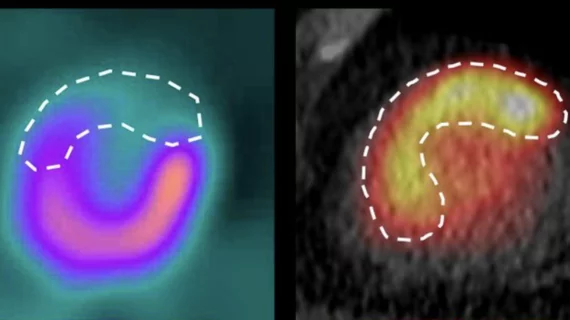
Targeting a specific protein on PET imaging may be the key to predicting functional outcomes following an acute myocardial infarction, new research suggests.
This concern is known to cause inflammation in the heart. The C-X-C motif chemokine receptor 4, or CXCR4, is a protein that plays a significant role in inflammatory processes, making it a potential biomarker that could offer greater detail about how much damage a patient’s heart sustained after an attack. A new paper in the Journal of Nuclear Medicine details how experts were able to target CXCR4 in post-myocardial infarction patients to gain vital information regarding their potential to fully recover.
"We know that [acute myocardial infarction] triggers an inflammatory response in the heart, which is a determinant of subsequent healing," Johanna Diekmann, MD, senior physician with the Department of Nuclear Medicine at Hannover Medical School, Germany, and colleagues noted in the paper. "Our study sought to image this inflammatory response to gain spatial and functional information that could predict outcomes and better inform treatment strategies."
The group hypothesized that upregulation of the protein on PET imaging could potentially predict left ventricular remodeling in the heart. This would offer insight into structural recovery as well, they suggested.
To test their theory, they deployed a myriad of imaging exams to visualize cardiac structure and function post-heart attack, including CXCR4-targeted PET/CT, myocardial perfusion imaging and cardiac MRI. The team conducted these exams on 49 patients within a week of them experiencing acute myocardial infarction, with 40 of them undergoing additional cardiac MRI scans 8 months later.
The PET scans revealed widespread CXCR4 upregulation beyond the site of the infarct and into bordering areas. This finding positively correlated with left ventricular function; initial left ventricular ejection fraction, follow-up left ventricular ejection fraction, and initial late gadolinium enhancement extent reflecting the area of myocardial injury all were linked to upregulation of the protein.
When compared to cardiac MRI findings, the PET data indicated that CXCR4 upregulation was significantly larger than the perfusion defect size but not larger than the late gadolinium enhancement extent in initial heart MR exams. CXCR4 upregulation was determined to be an independent predictor of follow-up left ventricular ejection fraction, even more so than baseline late gadolinium enhancement extent, suggesting it could be a potential biomarker for assessing heart damage and the likelihood of recovery.
"Conventional imaging modalities, including [myocardial perfusion imaging] and cardiac MR, predominantly quantify the extent of irreversible tissue damage but do not capture the dynamic inflammatory response that governs healing," the group noted. "By including CXCR4-targeted PET, we can identify patients who exhibit excessive or prolonged inflammation which may predispose them to adverse remodeling and heart failure. Such information could, in the future, support risk stratification and guide emerging anti-inflammatory or reparative therapies in a precision medicine framework."
Read more about the findings here.

In addition to her background in journalism, Hannah also has patient-facing experience in clinical settings, having spent more than 12 years working as a registered rad tech. She began covering the medical imaging industry for Innovate Healthcare in 2021.