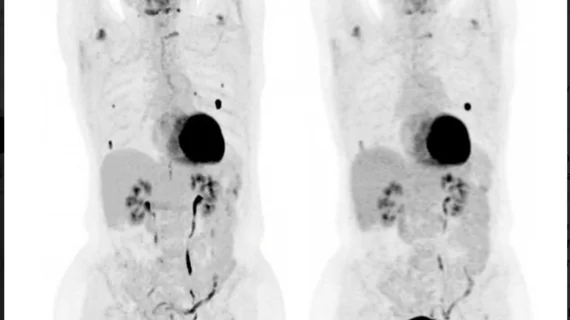
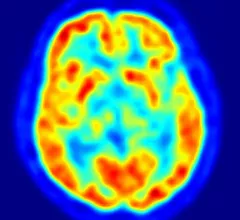
Positron emission tomography/computed tomography is a hybrid nuclear medicine imaging technique that helps radiologists spot abnormal metabolic activity. PET/CT is commonly used to diagnose cancers, heart diseases and certain brain disorders, among other conditions.
Though both modalities offer providers insight into the extent of a patient’s disease, WB-MRI may be more beneficial for patients than the current standard of care.
Though these treatments are typically done with assistance from real-time fluoroscopy, there is ample evidence nuclear imaging may offer more benefits.
Currently, the organization relies on a mobile PET unit that parks once every week. However, demand has grown for PET/CT in the area, rising by around 60% over the last three years alone.
The 10-minute scan can “light up” aldosterone-producing nodules in the adrenal glands following an injection of metomidate—a radioactive dye that binds specifically to aldosterone-producing nodules.
Prior to the Dec. 15 announcement, CMS had released a different statement in June informing the public that they were reconsidering the amount of PET scans that Alzheimer’s patients undergoing monoclonal antibody treatment can receive.
The radiotracer, 68Ga-PentixaFor, can be used for detecting C-X-C motif chemokine receptor 4 (CXCR4), which plays a significant role in cancer progression.
Common markers of Alzheimer's disease visualized on PET scans of asymptomatic patients might foreshadow the onset of symptoms in the years following their initial discovery.
There are limited data to determine whether pancreatitis in COVID patients is the result of a stress response triggered by severe illness or by direct damage to the β-cell structure and function.